Plant Index: Seminum / Rarium
Search/Filter Results:
Category: Seminum | Sub-Category: Wildflowers
Scientific Name (Genus/Species): Rudbeckia hirta
Family: Asteraceae
(B) to 4′. Black-eyed Susan. Central US. Cheery, golden-yellow daisies with dark, purple-brown, cone-shaped centres. A short lived perennial and reliable bloomer that has become popular as a bedding annual, but will opportunistically self-sow where happy. Blooms mid to late summer. Well-drained soil. Sun. 3 & 7

Category: Seminum | Sub-Category: Wildflowers
Scientific Name (Genus/Species): Rudbeckia subtomentosa
Family: (Asteraceae)
(P) to 6′. Sweet Black-eyed Susan. Tallgrass Prairie. A host of two-inch, bright yellow-petalled, dark-eyed daisies. Bushy clumps of downy, sweet scented, grey-green leaves; the lower leaves being three cleft. Blooms in late summer. Moist to well-drained soil. Sun. 3 & T2

Category: Seminum | Sub-Category: Wildflowers
Scientific Name (Genus/Species): Rudbeckia triloba
Family: (Asteraceae)
(B/P) to 4′. Three-lobed Coneflower. This biennial or short-lived perennial is native to Central Eastern US. Densely branched and somewhat hairy with thin, three-lobed, rough-textured leaves. The lower leaves ovate to ovate-cordate with long petioles, and upper leaves are less rounded and stalkless. Yellow-orange ray petals surround and accentuate the black to purple button discs. Good colour for the garden throughout the summer. Makes an excellent cut flower and is a mainstay in our bouquets. Sun. 4 & T2

Category: Seminum | Sub-Category: Perennials for Sun
Scientific Name (Genus/Species): Rudbeckia triloba ‘Prairie Glow’
Family: (Asteraceae)
(B/P) to 4′. Three-lobed Coneflower. Central Eastern US. A biennial or short-lived perennial selection which differs from the straight species with burgundy red stems and bicolour blooms. Self-sows in the Red/Orange/Yellow Bed of the Flower Garden where we can identify and sort them by their emerging reddish foliage. The branching stems hold on long to their two-inch wide blooms with rusty orange ray florets tipped with golden yellow surrounding a dark brown central cone. Summer blooming. Sun. 4 & T2

Category: Seminum | Sub-Category: Wildflowers
Scientific Name (Genus/Species): Ruellia pedunculata
Family: (Acanthaceae)
(P) to 3′. Stalked Wild Petunia. Solitary, pale lavender-violet, petunia-like blooms open in summer all along the leaf axils of upright, bushy plants. The paired, opposite leaves are a lustrous dark green. Sun/partial shade. 3 &T1

Category: Seminum | Sub-Category: Perennials for Sun
Scientific Name (Genus/Species): Rumex sanguineus var. sanguineus
Family: (Polygonaceae)
(P) to 12″. Bloody Dock. Europe. A fantastic foliage plant with pointed, oblong, medium green leaves, veined blood red to maroon. Reddish brown flowers froth in panicles. If you want a striking foliage plant at the front of the border, this is your plant. Sun/partial shade. 4 & T2

Category: Seminum | Sub-Category: Pots/Garden (overwinter indoors)
Scientific Name (Genus/Species): Ruscus aculeatus
Family: (Asparagaceae)
Tender evergreen shrub to 3′. Butcher’s Broom. Mediterranean, Central Europe. This is a stellar plant for pot culture in your home. Numerous, dark, glossy green stems are covered with sharp, rigid, scale-like leaves called cladophylls. Tiny, white flowers arise in the centre of the cladophylls and are followed by incredible, bold, red berries which persist indefinitely. Very interesting. Sun/partial shade. 3 & T3, then it may need 40

Category: Seminum | Sub-Category: Perennials for Sun
Scientific Name (Genus/Species): Ruta odorata
Family: (Rutaceae)
(P) to 2′. Dwarf Rue. Central Asia. Shrubby, low branching, woody-stemmed mounds of deeply divided, blue-green, aromatic foliage. Showy sprays of small, four-petalled, long-lasting, sulphur yellow blooms in summer. Makes a good edging plant but be careful when handling foliage as oil in leaves can cause a rash. This rare relative of R. graveolens has survived winters on our exposed Order Beds and is a gentle self-sower Well-drained soil. Sun. 3 & T2

Category: Seminum | Sub-Category: Annuals for Sun
Scientific Name (Genus/Species): Salvia argentea
Family: Lamiaceae
(B) to 3′. Silver Sage. Southern Europe, Portugal to Bulgaria. This biennial or short-lived perennial is grown mostly for its two to three-foot wide silver basal rosettes of woolly, wrinkled foliage in its first year. However, the two to three foot tall spikes of tubular, hooded, white flowers are attractive too, but the main appeal are the rosettes. May self-sow gently. Excellent for gravel gardens and drought-resistant plantings. Blooms spring to summer. Full sun. Average, well-drained soil. 4 & T3

Category: Rarium | Sub-Category: Annuals for Sun
Scientific Name (Genus/Species): Salvia coccinea 'Brenthurst'
Family: Lamiaceae
(A/TP) to 2.5′. A cool-coloured cousin of the red bedding Salvia with numerous spikes of bicoloured, lipped blooms. The pale whitish pink upper hoods and three lobed, deeper pink lower lips contrast nicely against the dark tinted calyces and stems. Blooms late summer and lasts until frost. Sun. 4 & T2

Category: Rarium | Sub-Category: Woodland
Scientific Name (Genus/Species): Salvia forsskaolii
Family: (Lamiaceae)
(P) to 3+’. Indigo Woodland Sage. Balkan peninsula, Bulgaria to Turkey. This plant was named after Finnish explorer Peter Forsskål, a student of Carl Linnaeus. Large basal clumps of textural green foliage give rise to long, branched flowering stems with whorls of showy, bi-lipped, violet-blue flowers with white streaks on the lower lip. A great Salvia for open woodland plantings. Blooms summer into early autumn. Full sun to part shade. Moist, well-drained soil. 4 & T3

Category: Seminum | Sub-Category: Woodland
Scientific Name (Genus/Species): Salvia koyamae
Family: (Lamiaceae)
(P) to 2.5′. Japanese Yellow Sage. Most Salvias prefer sun, but this unique Salvia, prefers partial shade. Spikes of whorled, large, clear yellow, hooded and lipped flowers bloom nonstop from August until hit by a hard frost. The bold, arrow-shaped foliage makes a handsome groundcover. 4 & T2

This seed is either sold out or unavailable
Category: Seminum | Sub-Category: Perennials for Sun
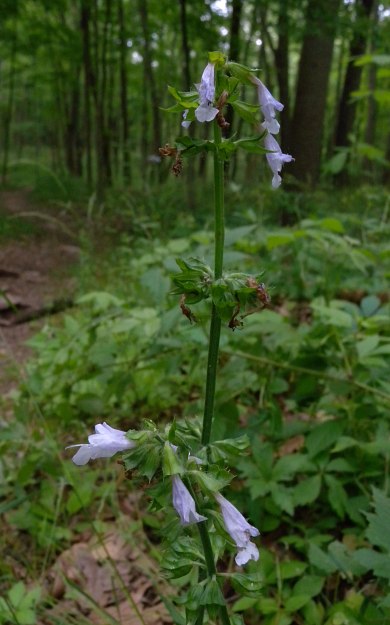
Scientific Name (Genus/Species): Salvia lyrata
Family: (Lamiaceae)
(P) to 20″. Lyre-leaved Sage. A native of eastern North America. Leafless flower stems display hooded, purple flowers in whorls in early summer. The calyces remain ornamental after the flowers fade. An attractive yet tough plant. Sun. 4 & T2
Category: Rarium | Sub-Category: Perennials for Sun
Scientific Name (Genus/Species): Salvia reptans
Family: (Lamiaceae)
(P) to 4′. West Texas Grass Salvia. Texas, Mexico, Guatemala. Typical Salvia flowers with five united petals; the lower three are vivid cobalt blue, the upper two are pale blue to white in colour. Flowers appear in whorls along the grass-like willowy stems with aromatic, needle-like foliage. As is the case with most Salvias, hummingbirds, bees and butterflies are attracted to the nectar-rich flowers. Blooms late summer to early fall. Well-drained soil. Sun. 4 & T2

This seed is either sold out or unavailable
Category: Seminum | Sub-Category: Annuals for Sun
Scientific Name (Genus/Species): Salvia sclarea
Family: (Lamiaceae)
(B) to 3′. Clary Sage. Europe to C Asia. First year rosettes are comprised of substantial, grey-green, rough-textured, ovate to oblong leaves to nine inches. The following summer brings many upright, pink-tinged flower stems clothed with large, showy, white tinged-rosy-purple bracts which hold the small, blue and white hooded flowers. Self-sows to keep an ongoing biennial balance with simultaneous first year rosettes and flowering plants. A very architectural, aromatic and showy plant that needs little care. Full sun, average garden soil. 4 & T2


 Browse the index >>