Plant Index: Seminum / Rarium
Search/Filter Results:
Category: Rarium | Sub-Category: Perennials for Sun
Scientific Name (Genus/Species): Centaurea macrocephala
Family: (Asteraceae)
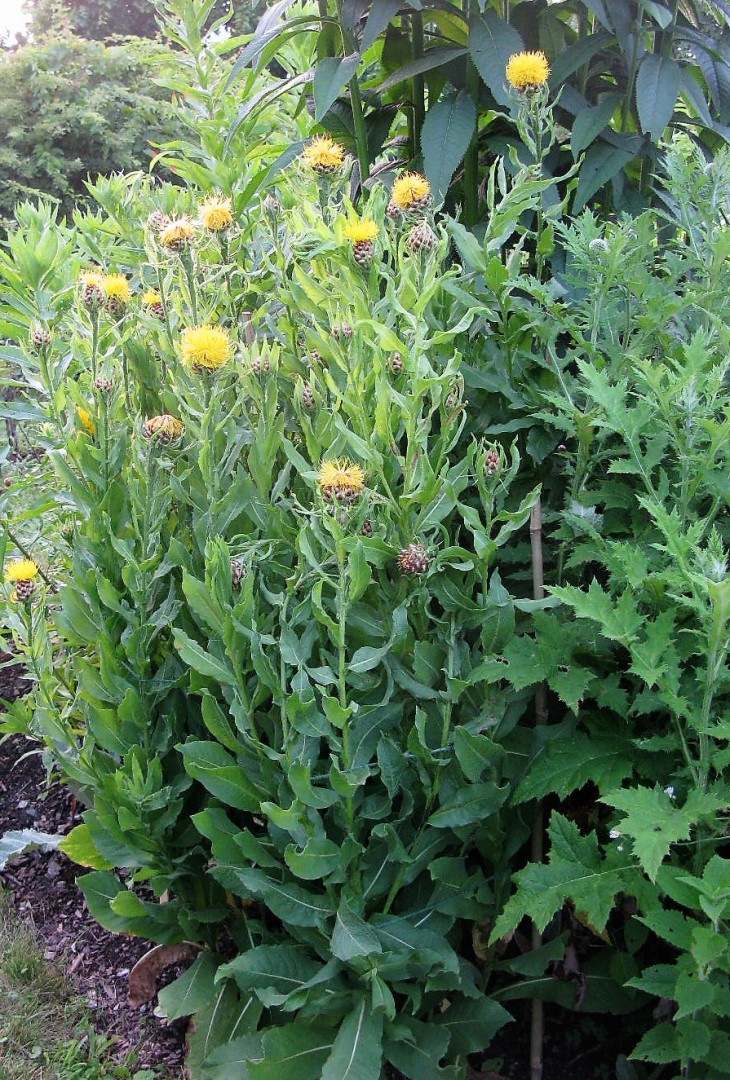
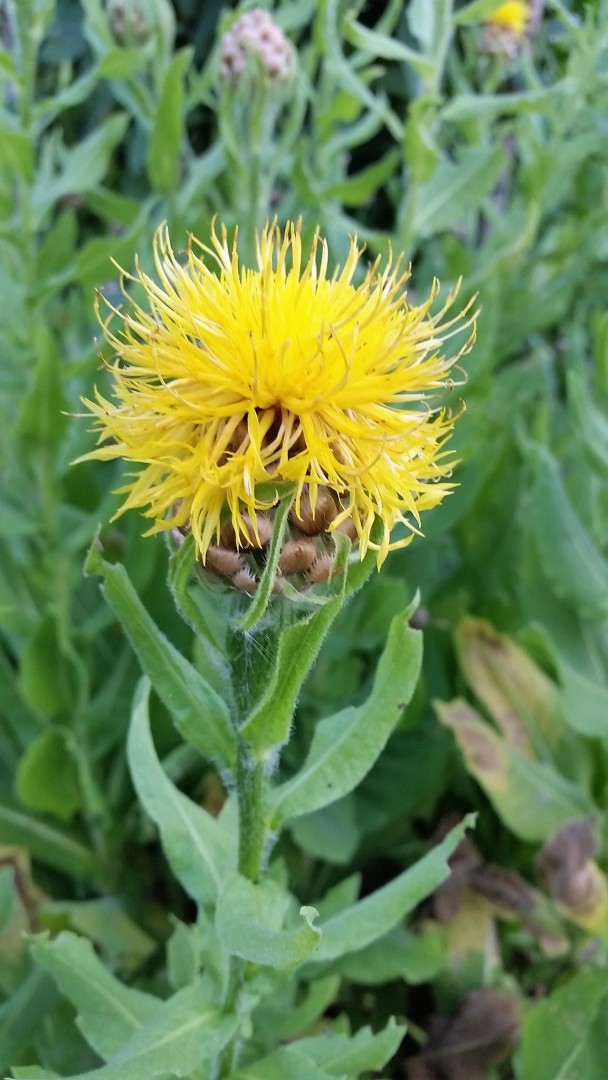
(P) to 3′. Great Golden Knapweed. Caucasus. A large, leafy, robust plant bearing sturdy stems topped with incredible, rich golden yellow, hemispherical, thistle-like blooms. The fringed, rusty brown coloured involucre of bracts is very prominent and persists. Midsummer. Makes excellent dried cut flowers. Sun. 3, D & T2
Category: Seminum | Sub-Category: Wildflowers
Scientific Name (Genus/Species): Centaurea phrygia
Family: Asteraceae
(P) to 4′. Wig Knapweed. Europe – meadows, field margins and open woods. A sparsely hairy to roughly textured perennial that combines well with informal plantings of ornamental grasses. The purplish lilac flowers have long, obliquely funnel-shaped, deeply divided, upward sweeping, outer ray florets; the central disc florets are smaller and tubular. Leaves are alternate, short-stalked and broadly lanceolate, with a regularly toothed margin. Sun. 3 & T2

This seed is either sold out or unavailable
Category: Rarium | Sub-Category: Pots/Garden (overwinter indoors)
Scientific Name (Genus/Species): Ceratostigma willmottianum
Family: (Plumbaginaceae)
(TP) to 4′. Chinese Plumbago. West China to Tibet. Deciduous shrub. Leaves lanceolate to obovate. Slender angled stems are tinged purple and bristly. Dense terminal heads of five-lobed, pale blue flowers, white centres, and red-purple corolla tubes. Foliage turns a beautiful tinted red in autumn. Sun/partial shade. 3 & T2

Category: Seminum | Sub-Category: Annuals for Sun
Scientific Name (Genus/Species): Cerinthe major 'Purpurascens'
Family: (Boraginaceae)
(A) to 2′. Honeywort. Mediterranean. Fleshy, blue-green leaves with white mottling, spiral up the stem, gradually turning to purple. Colourful bracts surround clusters of small, rich purple-blue, tubular, nodding flowers with cream interiors. Simply lovely. Sun. 3 & T1

Category: Rarium | Sub-Category: Pots/Garden (overwinter indoors)
Scientific Name (Genus/Species): Cestrum nocturnum
Family: (Solanaceae)
(TP) 13′. Lady of the Night. Central America and West Indies. A night-blooming evergreen shrub with slender arching branches of glossy green, elliptic to oblong leaves. A steady show of one inch long, creamy white to pale green, five-petalled tubular flowers bloom in axillary or terminal panicles. The flowers open at night and perfume the air with an intoxicating jasmine-citrus aroma. The flowers are pollinated by moths and other night-flying insects resulting in ¼ inch long, ovoid to oblong, white berries. Lady of the Night is an incredibly useful plant for us – we grow several in clay pots. We also plant youngsters in the Flower Garden and the Order Beds for their summer display and amazing fragrance on our evening rambles. Sun. 3 & T3

Category: Seminum | Sub-Category: Pots/Garden (overwinter indoors)
Scientific Name (Genus/Species): Chasmanthe bicolor
Family: (Iridaceae)
Tender bulb to 3′. Two Colour Cobra Lily. A choice South African bulb to cheer your winter blues. Emerging from dormancy in late fall, the silky, sword-shaped leaves arranged in a fan, precede the hot-coloured blooms in mid-winter. The blooms are alternately arranged on a long raceme, which is laden with the eye-catching, six-petalled, tubular flowers that are up to 3 inches long and feature orange-scarlet upper and lateral tepals. The three, greenish yellow, lower tepals are fused forming a cylindrical perianth tube containing valuable nectar. Sun. 3 & T2

Category: Seminum | Sub-Category: Ornamental Grasses
Scientific Name (Genus/Species): Chasmanthium latifolium
Family: (Poaceae)
(P) to 3′. Northern Sea Oats. A beautiful native grass producing branching stems with flattened, green, drooping spikelets in summer. These turn a bronze colour in autumn, as do the tufted clumps of flat-leaved foliage. Sun/partial shade. 4 & T1

Category: Seminum | Sub-Category: Perennials for Sun
Scientific Name (Genus/Species): Chelidonium majus var. laciniatum (syn. Chelidonium 'Bowles' Variety')
Family: (Papaveraceae)
(P) to 2.5′. A special selection of the Celandine Poppy with deeply lobed leaves and loads of summer-blooming, double golden yellow flowers that brings excitement to a shady garden. Bright orange sap may irritate skin. Partial shade. 3 & 6A

Category: Seminum | Sub-Category: Wildflowers
Scientific Name (Genus/Species): Cichorium intybus
Family: (Asteraceae)
(P) to 4′. Common Chicory. Europe. Attractive, stalkless, typically clear blue flowers to 1”, clasp rigid, nearly leafless stems in a long procession of bloom from May to October. Rays are typically blue but occasionally white or pink, and usually close by noon. Lower lance-shaped, dandelion-like, basal leaves up to 6″ long are variously toothed, cut or lobed and have rough-hairy surfaces. Upper stem leaves are smaller with clasping bases. The deep fleshy taproot exudes a milky sap when cut. Chicory can be found along roadsides, and is now common in North America, China, and Australia, where it has become widely naturalized. Many varieties are cultivated for salad leaves, chicons (blanched buds). Chicory roots (var. sativum), which are baked and ground, were used as a coffee substitute by Confederate soldiers during the American Civil War and also used in the United Kingdom during the Second World War, where Camp Coffee, a coffee and chicory essence, has been on sale since 1885 and still popular today. 4 & T1

Category: Rarium | Sub-Category: Perennials for Sun
Scientific Name (Genus/Species): Clematis heracleifolia
Family: (Ranunculaceae)
(P) to 3′. This herbaceous, non-climbing clematis can be found in the blue/lavender/grey bed of the Flower Garden. The individual florets are tight, blue, and reminiscent of Hyacinth blooms, opening wide to expose pale centres and numerous cream stamens. Silvery, fluffy seedheads provide later beauty. Pleasantly fragrant. Full sun to partial shade in cool, moist soil. 3 & 7 for 8 weeks, then T2

Category: Seminum | Sub-Category: Shrubs and Vines
Scientific Name (Genus/Species): Clematis hexapetala
Family: (Ranunculaceae)
Hardy vine to 10′. Northeast China, Japan. This Clematis resembles the Sweet Autumn Clematis. Many flowered cymes of one-inch, white blooms with prominent, creamy stamens are borne in profusion. However, the major distinction is the early summer bloom. A focal point in our White Bed, growing up a tripod. Sun. 3 & 7 for 8 weeks, then T2


Category: Seminum | Sub-Category: Perennials for Sun
Scientific Name (Genus/Species): Clematis integrifolia
Family: (Ranunculaceae)
(P) to 3′. Solitary Clematis. Central Europe and Asia. This upright, non-climbing Clematis has rich, indigo-violet, nodding, urn-shaped flowers with four twisted sepals and creamy anthers. Attractive, feathery seedheads follow and persist. Blooms May to July. Sun. 3 & 7 for 8 weeks, then T2

Category: Rarium | Sub-Category: Perennials for Sun
Scientific Name (Genus/Species): Clematis integrifolia pink-flowered
Family: (Ranunculaceae)
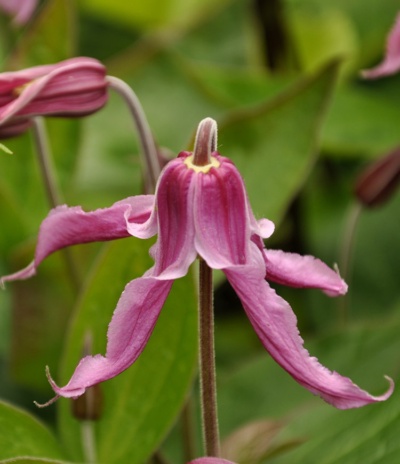
(P) to 3′. Solitary Clematis. Central Europe and Asia. An upright, non-climbing Clematis with 2-inch, bell-shaped flowers that are a bright clear to pale mauve pink with heavily ribbed, spreading tepals and a central cluster of deep yellow stamens. Attractive, feathery seedheads follow. Mid-to-late summer. Sun. 3 & 7 for 8 weeks, then T2
Category: Rarium | Sub-Category: Shrubs and Vines
Scientific Name (Genus/Species): Clematis serratifolia
Family: (Ranunculaceae)
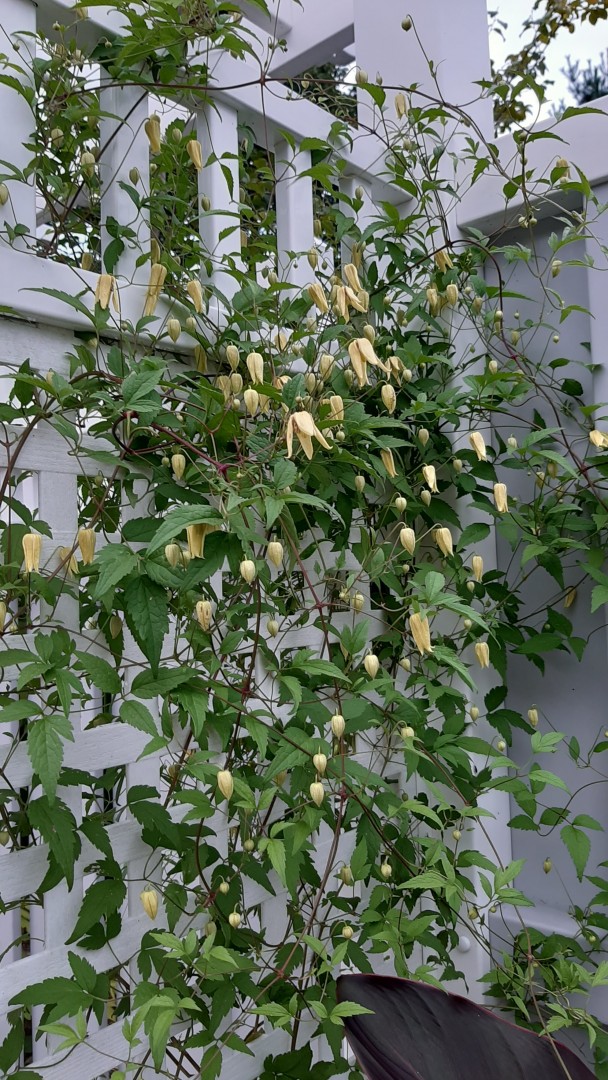
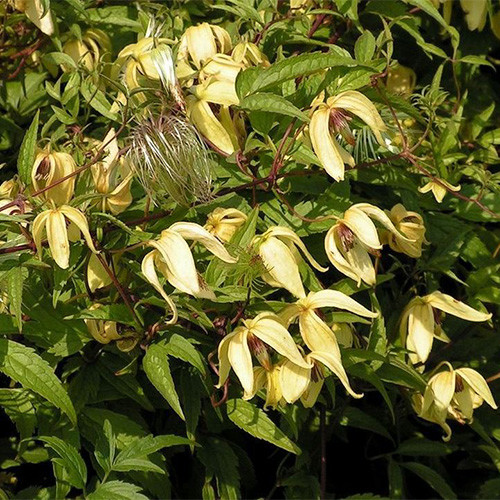
Hardy vine to 9′. Korean Clematis. A graceful Clematis with ovate to lanceolate, serrated leaves that sets forth a succession of soft yellow, nodding bells with violet stamens. The flowers have a delicate lemon scent and bloom from August to October. An added delight is the fluffy, white, snowball seed heads that cover the plant until winter. A stunning beauty for the late summer garden. Sun/partial shade. 3 & 7 for 8 weeks, then T2
Category: Rarium | Sub-Category: Shrubs and Vines
Scientific Name (Genus/Species): Clematis texensis
Family: (Ranunculaceae)
Hardy vine to 9′. Scarlet Leatherflower. Southwest US. Urn-shaped flowers consist of four, thick, leather-like, rose-red to scarlet coloured tepals that recurve at the tip to reveal a paler interior. Flowers are borne only on new growth and are held atop purple pedicels in axillary clusters of one to seven. The delicate foliage is a glaucous green and the ovate to rounded leaves with wavy margins enhance the charm of the flowers. A mass of feathery balls of plumed achenes follows the floral display. At Stonecrop ours grows in a crevice on the Rock Ledge. This is a very hardy and relatively drought tolerant Clematis. A long bloomer from mid-summer through fall. 3 & 7 for 8 weeks, then T2

 Browse the index >>