Category: Seminum | Sub-Category: Ornamental Grasses
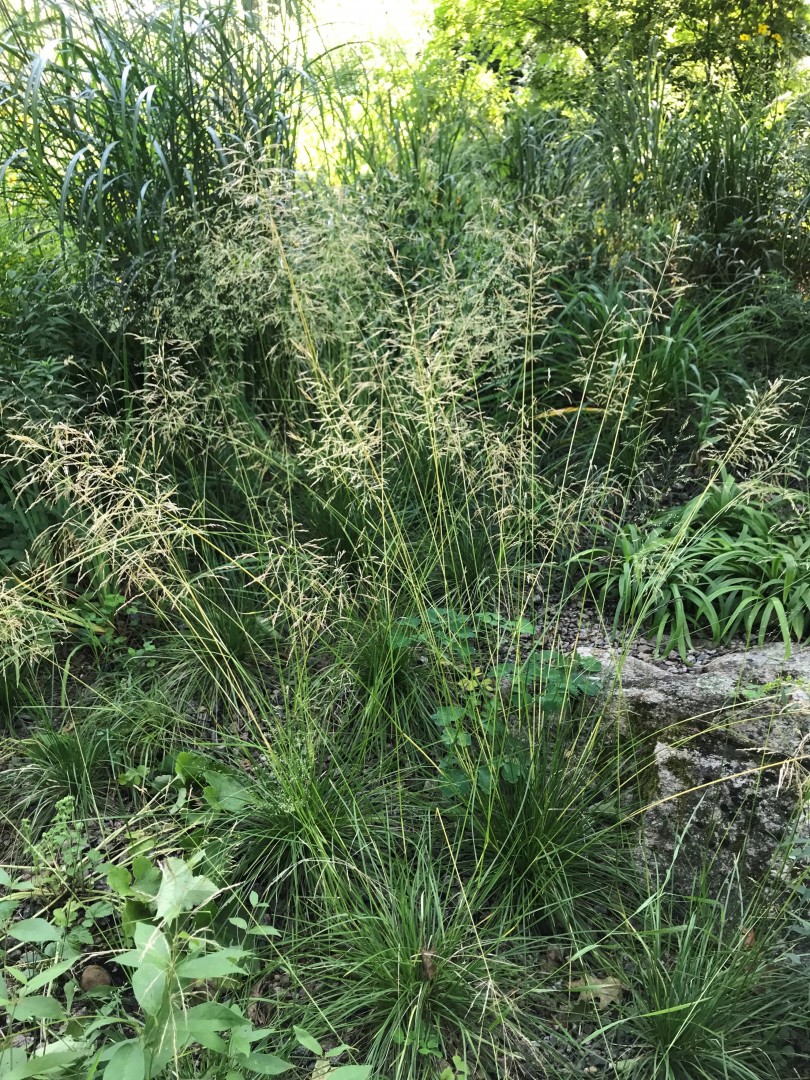
Scientific Name (Genus/Species): Deschampsia cespitosa
Family: (Poaceae)
(P) to 3′. Tufted Hair Grass. North America. This semi-evergreen grass forms a dense clump of narrow, dark green leaves up to 18 inches long. In early summer, finely textured, arching flower stalks rise to 3 feet. Spikelets (flower clusters) are single at the tips of slender branchlets with hair-like awns and are greenish-silver to purple-tinged. As the season progresses the spikelets bleach to tawny and remain attractive, persisting well into winter. Bonus: Larval food plant for several butterflies in North America including the Umber Skipper. Sun/partial shade. 4 & T1
Category: Seminum | Sub-Category: Ornamental Grasses
Scientific Name (Genus/Species): Calamagrostis epigejos
Family: (Poaceae)
(P) to 5′. Wood Small-Reed. Eurasia. Linear, silver-green foliage becoming purple-bronze as the season progresses. Flowers are erect and foxtail-like, emerging green-grey and becoming auburn as they mature. This grass receives so many compliments in our Flower Garden. We started it from seed ourselves many years ago. Sun. 4 & T1

Category: Seminum | Sub-Category: Ornamental Grasses
Scientific Name (Genus/Species): Carex muskingumensis
Family: (Cyperaceae)
(P) to 2′. Palm Sedge. Western North America. A trouble-free sedge that thrives at the edge of our Rock Ledge. Ribbed, ½-inch-wide leaf blades are pale green. Dense seedheads are persistent and attractive. Sun. 4 & T2

Category: Seminum | Sub-Category: Ornamental Grasses
Scientific Name (Genus/Species): Chasmanthium latifolium
Family: (Poaceae)
(P) to 3′. Northern Sea Oats. A beautiful native grass producing branching stems with flattened, green, drooping spikelets in summer. These turn a bronze colour in autumn, as do the tufted clumps of flat-leaved foliage. Sun/partial shade. 4 & T1

Category: Seminum | Sub-Category: Ornamental Grasses
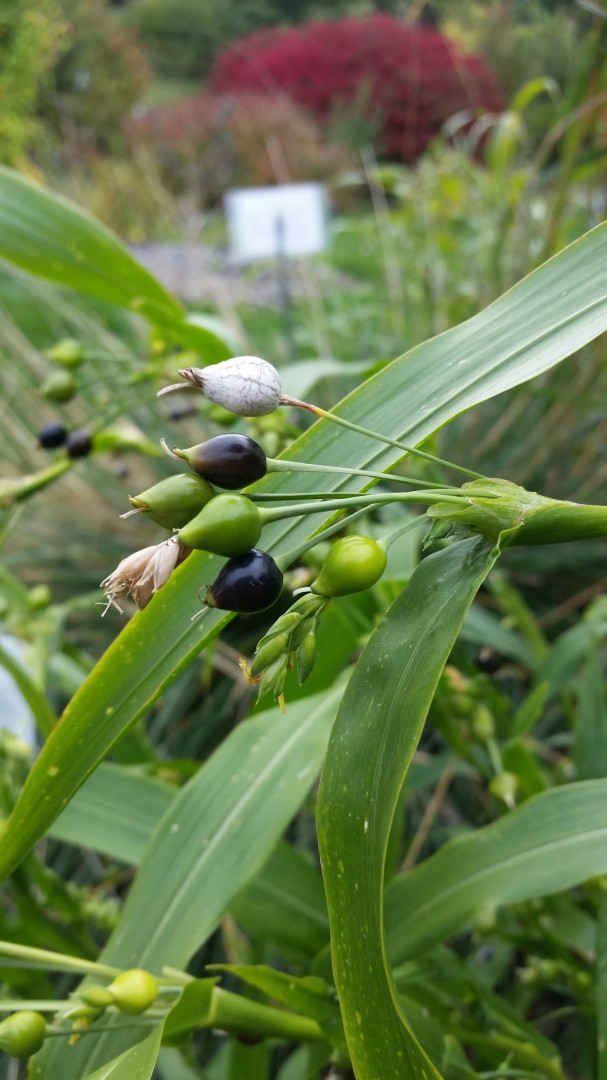
Scientific Name (Genus/Species): Coix lacryma-jobi
Family: (Poaceae)
(A) to 4′. Job’s Tears. Southeast Asia. A “must-have” grass with apple green, strap-like leaves. Makes a great architectural addition to the flower border. String yourself a necklace with the shining, white to black, teardrop-shaped seeds. Sun. 3 & T2
Category: Seminum | Sub-Category: Ornamental Grasses
Scientific Name (Genus/Species): Hystrix patula
Family: (Poaceae)
(P) to 5′. Bottlebrush Grass. This American native is widely adaptable, growing in sun or moderate shade, in clay or rocky soil. When the flowerheads open, the spiky florets stick out at right angles, just like a bottlebrush. Attractive until frost. Easy from seed. 4 & T1

Category: Seminum | Sub-Category: Ornamental Grasses
Scientific Name (Genus/Species): Melica altissima 'Atropurpurea'
Family: (Poaceae)
(P) to 4′. Siberian Melic. Native to thickets and forest edges of eastern Europe. Dense, leafy clumps of mid-green foliage. Tall flower stems topped with loose, one-sided panicles of deep purple, overlapping spikelets. A terrific addition to our Red Bed. Summer. Well-drained soil. Sun. 4 & T1

Category: Seminum | Sub-Category: Ornamental Grasses
Scientific Name (Genus/Species): Sorghastrum nutans
Family: (Poaceae)
(P) to 5′. Indian Grass. Eastern North America. Perhaps one of the most beautiful of all prairie grasses. Sturdy, upright clumps of narrow, green foliage become bright burnished orange in the fall. Erect stems with showy flower panicles are copper coloured with conspicuous yellow pollen sacs. The paired spikelets have distinctive, bristly awns giving them a soft, delicate, feathery quality. Adaptable to a wide variety of uses. Indian Grass will grow in most soils and will even tolerate some shade, though it prefers a rich, loamy soil with plenty of sun. 4 & T1

Category: Seminum | Sub-Category: Ornamental Grasses
Scientific Name (Genus/Species): Spodiopogon sibiricus
Family: (Poaceae)
(P) to 4′. Frost Grass. Japan, Korea and China. A clump-forming, upright grass of mountains and forest glades. Similar to a small bamboo in texture, with its thin, flat leaves held nearly at right angles to the stem. Admired for its interesting, bold foliage which develops a reddish purple tinge in autumn. The airy panicles of purple-blushed spikelets are covered with fine hairs giving an overall “frosted” appearance. The mature flowerheads remain persistent and showy through winter. Blooms from July through August. Moist soil. Sun/partial shade. 4 & T1

 Browse the index >>