Category: Seminum | Sub-Category: Perennials for Sun
Scientific Name (Genus/Species): Eriophyllum lanatum
Family: (Asteraceae)
(P) to 18″. Oregon Sunshine. W. North America. This compact perennial forms a low cushion of silvery leaves up to 3 inches long that are irregularly divided into narrow lobes. Both stems and leaves are covered with white hairs. Brilliant golden-yellow daisy-like flowers rise on long, grey stems. Blooms freely in summer and attractive to bees and butterflies. Great in perennial borders, rock gardens and embankments. Well-drained soil. Full sun to part shade. 4 & T2

Category: Seminum | Sub-Category: Perennials for Sun
Scientific Name (Genus/Species): Anemone hupehensis var. japonica
Family: (Ranunculaceae)
(P) to 2-½’. Japanese Anemone. Native to China, Japan. Basal foliage clump to 12 inches tall is comprised of 3-parted, dark green leaves on long petioles. Each leaf has large-toothed margins and is softly pubescent beneath. Long, upright, wiry, graceful, branching flower stems rise well above the foliage clump bearing single, cup-shaped, apetalous, two-to-three-inch flowers. Each flower contains five to seven showy, rounded, pinkish-white to pale rose-mauve tepals with a contrasting green, button-like center containing a ring of yellow stamens. Flowers from midsummer to autumn. This hardy perennial is beautiful in the woodland garden or border and planted in masses. Moist, fertile, humusy soil in sun or partial shade. 3 & 6 & T2

Category: Seminum | Sub-Category: Perennials for Sun
Scientific Name (Genus/Species): Calamintha nepeta
Family: (Lamiaceae)
(P) to 2′. Calamint. Europe and Asia. Loose mounds of deliciously aromatic foliage are literally covered from August until frost with dainty, lavender, and white, hooded flowers with a tri-lobed lower lip. The soft, mid-green leaves are attractive too, and in a well-drained, sunny pot it makes the perfect edge to path or border. Sun. 3 & T1

Category: Seminum | Sub-Category: Perennials for Sun
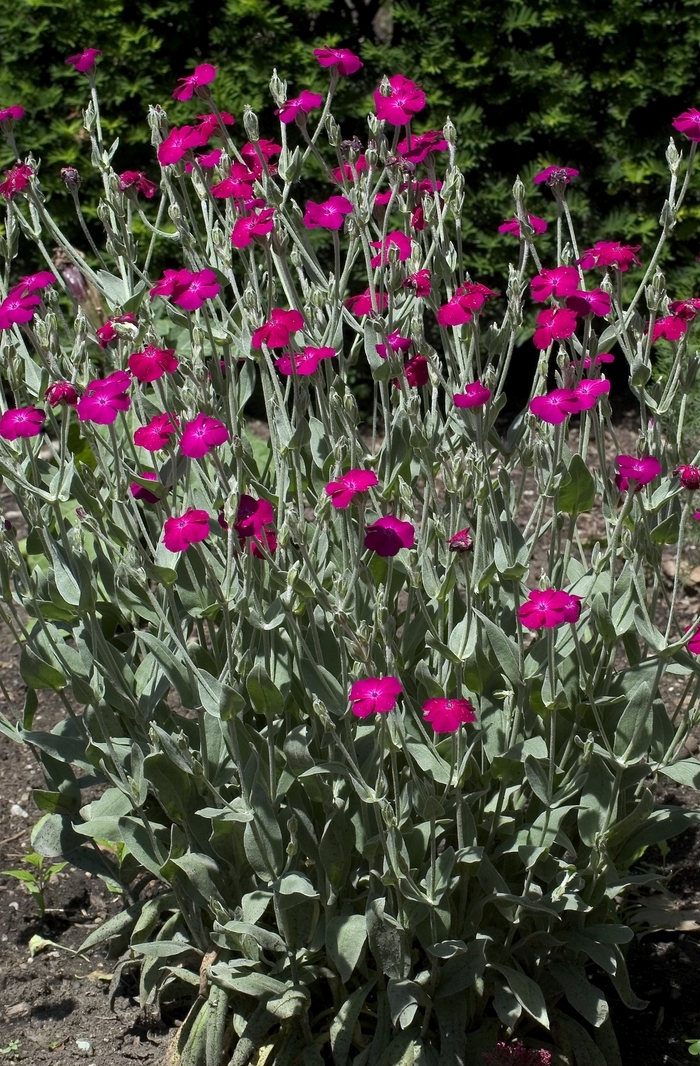
Scientific Name (Genus/Species): Lychnis coronaria
Family: (Caryophyllaceae)
(P) to 3′. Rose Campion. Asia, Europe. A cottage garden classic. Tall grey stems with vivid, five-petalled, rose-magenta blooms are borne over clumps of ovate, densely woolly, silver-grey, flannelly leaves. Blooms June and July. Sun/partial shade. Prefers moist soil but will tolerate poor soils with some dryness. 4 & T2
Category: Rarium | Sub-Category: Perennials for Sun
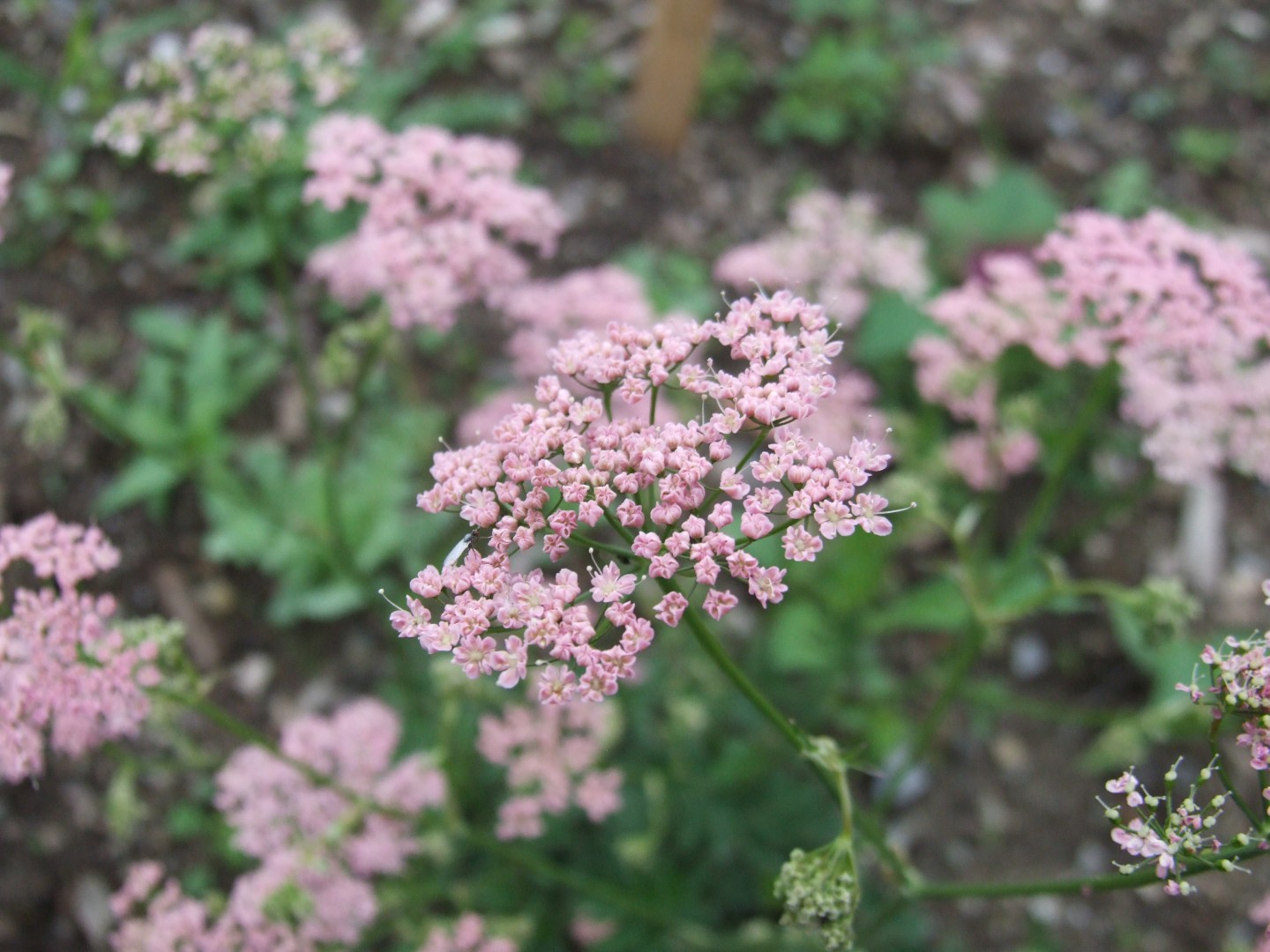
Scientific Name (Genus/Species): Pimpinella major 'Rosea'
Family: (Apiaceae)
(P) to 3′. Greater Burnet Saxifrage. A gorgeous pink flowered form of this European native. Airy, arching, delicate umbels of pale pink are held above a leafy basal rosette of serrated, fern-like foliage. Summer blooming. Sun/partial shade. Moist, well-drained soil. 4 & T2
Category: Rarium | Sub-Category: Perennials for Sun
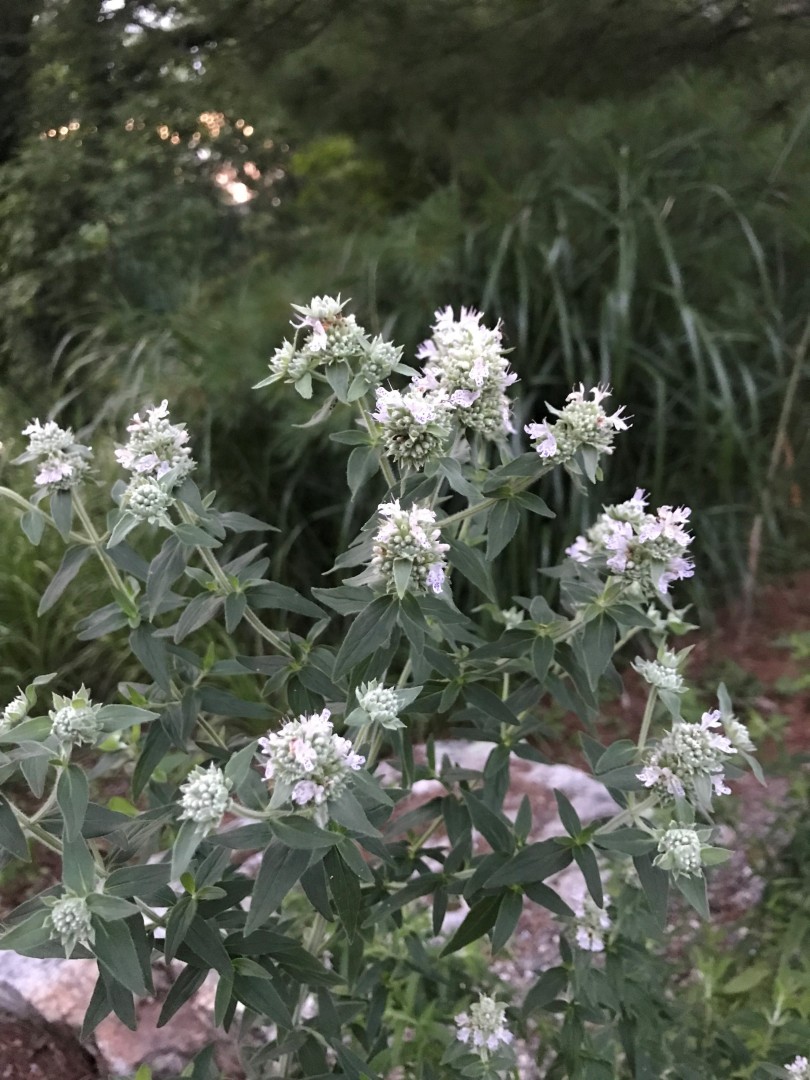
Scientific Name (Genus/Species): Pycnanthemum pilosum
Family: (Lamiaceae)
(P) to 3′. Hairy Mountain Mint. Eastern and Central US. This herbaceous perennial branches frequently to create a slender bushy appearance with flowers appearing in both terminal and axillary clusters. The stems are light green, 4-angled, densely pubescent on all sides (giving an overall grey appearance), and very aromatic when bruised. The upper stems terminate in branching flowerheads that are flat-topped, spanning up to one inch across. The typical mint-like flowers are hooded and lipped with purple specks and dots scattered across its throat and the lobes of its lips. The nectar-rich flowers are very attractive to many native pollinators. A good candidate for the white garden. Sun. 4 & T2
Category: Seminum | Sub-Category: Perennials for Sun
Scientific Name (Genus/Species): Papaver atlanticum
Family: (Papaveraceae)
(P) to 2′. Moroccan Poppy. Soft orange, two-inch, single, tissue paper blooms with yellow anthers are followed by club-shaped pods. Pale green, silken, jagged basal leaves. Self-sows beautifully. Sun. 4, D & T2


Category: Seminum | Sub-Category: Perennials for Sun
Scientific Name (Genus/Species): Crambe maritima
Family: (Brassicaceae)
(P) to 2′. Sea Kale. Coastal North Europe, Baltic and Black Seas. Often grown as a vegetable, however, we like it in the mixed border. The early emerging foliage is flushed deep purple; this is the edible stage. The unfurled leaves are wide, wavy, lobed, and glaucous providing an attractive foil for the large panicles of honey-scented, white, four-petalled flowers. Long summer bloomer. Well-drained soil. Sun. 3 & T2


Category: Rarium | Sub-Category: Perennials for Sun
Scientific Name (Genus/Species): Yucca smalliana
Family: (Asparagaceae)
(P) to 4′. Bear Grass Yucca. Southern North America. This Yucca is similar in many ways to the more popular Adam’s Needle (Yucca filamentosa), however smaller in stature. Also, the leaves are finer, flatter, and narrower with smoother leaf margins, except for the occasional thread-like fibres. The flowers are opalescent white and may at times have a light pink-tinge. Yuccas will form a small colony over time from basal offsets. Well-drained soil. Sun. 3 & T2

Category: Seminum | Sub-Category: Perennials for Sun
Scientific Name (Genus/Species): Dianthus carthusianorum
Family: (Caryophyllaceae)
(P) to 2′. Cluster-head Pink. Native to sunny hillsides and dry meadows throughout central and southern Europe. Dianthus carthusianorum was named to commemorate the monks of the Carthusian order, founded in the 11th century in the Chartreuse Valley in the French Alps. Dense, terminal clusters of five-petalled, toothed, pinkish purple flowers on slender, airy stems. Grassy clumps of narrow, pale grey-green foliage adds to the charm. Blooms in midsummer. Well-drained soil. Sun. 4 & T2

 Browse the index >>