Category: Rarium | Sub-Category: Perennials for Sun
Scientific Name (Genus/Species): Sisymbrium luteum (syn. Hesperis lutea)
Family: (Brassicaceae)
(P) to 4′. Japan and Korea. Forms a bushy clump of coarsely pilose, pinnate, grey-green foliage that freely produces dense, elongated racemes of four-petalled, pale yellow flowers in summer. Good for cutting. Well-drained soil. Sun/partial shade. 4 & T3

Category: Rarium | Sub-Category: Perennials for Sun
Scientific Name (Genus/Species): Stachys macrantha
Family: (Lamiaceae)
(P) to 2.5′. Caucasus. One to covet. Wavy-edged, dark green foliage and spikes of purplish pink, hooded, lipped flowers. Excellent in the border. Sun/partial shade. 3 & T2

Category: Rarium | Sub-Category: Perennials for Sun
Scientific Name (Genus/Species): Thermopsis villosa (syn. Thermopsis caroliniana)
Family: (Fabaceae)
(P) to 5′. Carolina Lupine. Southeastern United States. Tall spikes of bright-yellow, pea-like flowers over loose clumps of glaucous, softly downy foliage with three-part, clover-like elliptical leaflets. Blooms in early summer. Well-drained soil. Sun. 1 & 2B then 3 & T2

Category: Rarium | Sub-Category: Perennials for Sun
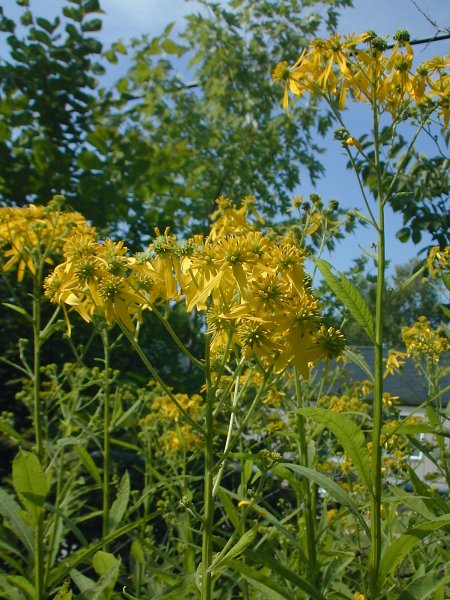
Scientific Name (Genus/Species): Verbesina alternifolia
Family: (Asteraceae)
(P) to 6′. Wingstem. East coast native. Stems winged, leaves alternate, lanceolate-elliptic to 10 inches long with serrated margins. The loose corymbs of many one-inch, yellow daisies grace the garden in late summer. Sun. 4 & T1
Category: Rarium | Sub-Category: Perennials for Sun
Scientific Name (Genus/Species): Vernonia altissima
Family: (Asteraceae)
(P) to 8′. Tall Ironweed. Eastern North America. Loose, flattened clusters of thistle-like, purple flowers atop towering stems. Large irregularly toothed and pointed leaves. Not for the faint of heart! Blooms from late summer into autumn. Moist soil. Sun/partial shade. 3 & T1 for 3 months, then T2

Category: Seminum | Sub-Category: Perennials for Sun
Scientific Name (Genus/Species): Eupatorium perfoliatum
Family: (Asteraceae)
(P) to 4.5′. Boneset. A southeastern American native with striking leaf and stem structure. As if it were a fencing foil, the stem pierces through long, pointed, opposing, rough, bristly leaves. Clusters of cream-coloured flowers are held up on corymbs. September. Moist soil. Sun/partial shade. 4 & T2

Category: Seminum | Sub-Category: Perennials for Sun
Scientific Name (Genus/Species): Erysimum hungaricum
Family: (Brassicaceae)
(P) to 2′. Hungarian Wallflower. Carpathian Mountains. A central European native producing a gorgeous show of sweet-smelling, lemon yellow, four-petalled blooms. Summer bloomer. Self-sows. Well-drained soil. Sun. 3 & T1

Category: Seminum | Sub-Category: Perennials for Sun
Scientific Name (Genus/Species): Campanula alliariifolia
Family: (Campanulaceae)
(P) to 2′. Ivory Bellflower. “A clump-forming plant with attractive, heart-shaped green leaves forming a base to the erect wiry stems from which shapely cream bells nod along their entire length.” (GST**). We love this plant in our Gravel Garden. Sun. 4 & T2

Category: Seminum | Sub-Category: Perennials for Sun
Scientific Name (Genus/Species): Astrantia major
Family: (Apiaceae)
(P) to 2.5′. Great Masterwort. Central and eastern Europe. No garden should be without this effortless and beautiful plant. Several greenish white, often blushed pink flowerheads each arranged in a dome with a “collar” of bracts. Dense clumps of divided basal foliage. Content in the flower garden or in the woodland. Summer blooming. Great in flower arrangements, too. Sun/partial shade. PC- 4 weeks. 4 & 7 for 4 weeks, then T2

Category: Seminum | Sub-Category: Perennials for Sun
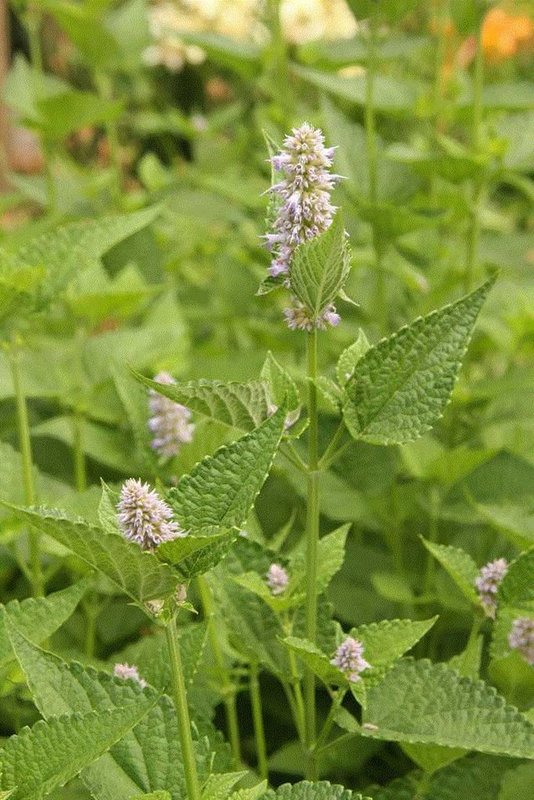
Scientific Name (Genus/Species): Agastache foeniculum
Family: (Lamiaceae)
Short-lived perennial to 3-½’. Anise Hyssop. A North American native with aromatic, anise-scented foliage. Lavender-blue flowers appear in many-flowered verticillasters which are densely packed into showy, cylindrical, terminal flower spikes up to 6 inches long. Mid-summer bloomer is attractive to all pollinators. Self-sows. Sun/partial shade. 4 & T2
 Browse the index >>