Category: Seminum | Sub-Category: Wildflowers
Scientific Name (Genus/Species): Tradescantia subaspera
Family: (Commelinaceae)
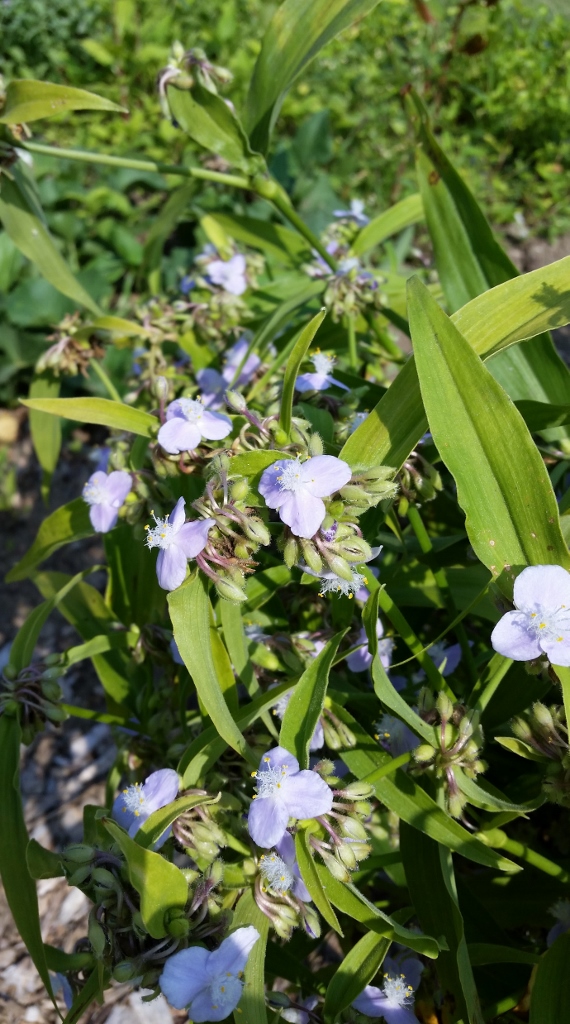
(P) to 3′. Zigzag Spiderwort. Missouri. Broader leaves and the distinctive zigzag stem set it apart from the old faithful T. virginiana. Terminal clusters of numerous flower buds open daily to large, violet blue, three-petalled flowers that are highlighted by the yellow anthers atop long, hairy, blue filaments. We cut the foliage in half after flowering to prevent flopping and encourage new growth and possible repeat blooms. After cutting back a viscous secretion is released from the stem, which hardens to become thread-like and silky-like the web of a spider. Ours is growing on the Order Beds in full sun and good soil. A long bloom time from May to August. 3 & T1
Category: Seminum | Sub-Category: Wildflowers
Scientific Name (Genus/Species): Verbesina virginica
Family: (Asteraceae)
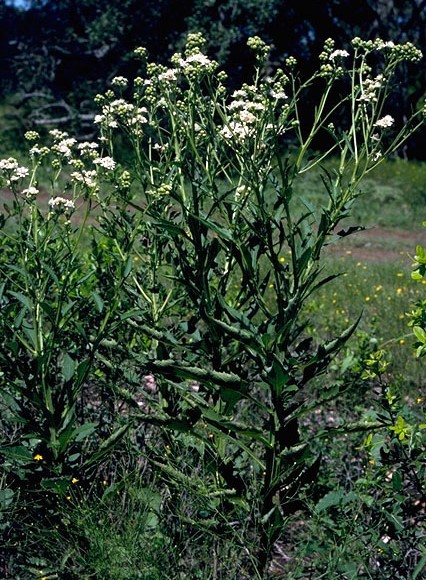
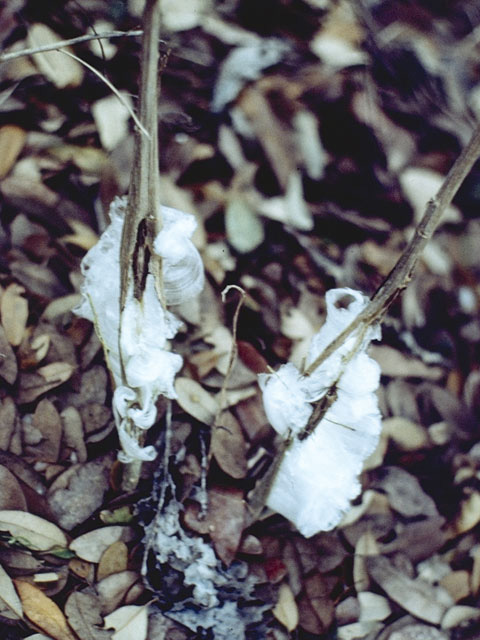
(P) to 6′. Frostweed, Virginia Crownbeard. Southeastern US. From a distance, the many loose, open corymbs of small flowers look like white “daisies.” On closer inspection the flowers are comprised of up to five oblong and notched, pistillate ray florets and many white central disc florets with five prominent, exserted, purple anthers. The pubescent, winged stems are interesting with their up to six-inch long, downy, alternate, oblong-lanceolate leaves with serrated margins. Each stem has soft, fleshy green flanges running longitudinally down its length. When winter weather brings ice, the stems exude water that freezes into fascinating shapes, hence its common name. Blooms late summer. Often seen along roadsides and open places. An important late season nectar plant for pollinators. Well-drained soil. Sun/partial shade. 4 & T1
Category: Seminum | Sub-Category: Wildflowers
Scientific Name (Genus/Species): Vernonia noveboracensis
Family: (Asteraceae)
(P) to 6′. New York Ironweed. Terminal clusters of fuzzy, thistle-like deep purple florets bloom in late summer. Strong stems have whorls of alternate, lanceolate, pointed leaves. Earns its name because of its “iron-like” qualities – tough stems, the rusty-tinged colour of fading flowers and the rusty colour of the persistent, ripe seed heads. Moist soil. Sun/partial shade. 3 & T1 for 3 months, then T2

Category: Seminum | Sub-Category: Wildflowers
Scientific Name (Genus/Species): Asclepias incarnata 'Alba'
Family: (Apocynaceae)
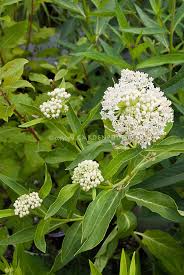
(P) to 4′. A lovely white-flowered form of the Swamp Milkweed. Tolerates average, well-drained soil in cultivation but does best in moist areas. Blooms July through September. Sun. 4 & T1
Category: Seminum | Sub-Category: Wildflowers
Scientific Name (Genus/Species): Helianthus hirsutus
Family: (Asteraceae)
(P) to 4′. Rough or Bristly Sunflower. Midwest. A tough, native sunflower producing a flourish of bright yellow, three-inch, daisy-like flowers from midsummer to autumn. The short stalked, lanceolate leaves have a distinctive rough, sandpapery texture. Found along dry woodland edges and roadsides, this clump-forming perennial makes a useful colonizer for those rocky or difficult spots. Sun/partial shade. 3 & T3

Category: Seminum | Sub-Category: Wildflowers
Scientific Name (Genus/Species): Rudbeckia triloba
Family: (Asteraceae)
(B/P) to 4′. Three-lobed Coneflower. This biennial or short-lived perennial is native to Central Eastern US. Densely branched and somewhat hairy with thin, three-lobed, rough-textured leaves. The lower leaves ovate to ovate-cordate with long petioles, and upper leaves are less rounded and stalkless. Yellow-orange ray petals surround and accentuate the black to purple button discs. Good colour for the garden throughout the summer. Makes an excellent cut flower and is a mainstay in our bouquets. Sun. 4 & T2

Category: Seminum | Sub-Category: Wildflowers
Scientific Name (Genus/Species): Senna marilandica (syn. Cassia marilandica)
Family: (Caesalpiniaceae)
(P) to 6′. Southern Wild Senna. Eastern North America. Very similar to the above, the flowers of Senna marilandica have styles with short appressed hairs, while the flowers of Senna hebecarpa have styles with long spreading hairs. Southern Wild Senna, because its range doesn’t extend as far north as a closely related species, Senna hebecarpa (Wild Senna). Blooms from July to September. Well-drained soil. Sun/partial shade. 1 & 3 & T3

Category: Seminum | Sub-Category: Wildflowers
Scientific Name (Genus/Species): Asclepias incarnata
Family: (Apocynaceae)
(P) to 4.5′. Swamp Milkweed. Northeast and Southeast United States. Pale pink umbels are tough, reliable, and attractive. Flowers July through September. An important butterfly plant. We love it in our Pink/Chartreuse Bed. Sun. 4 & T1


 Browse the index >>