Category: Seminum | Sub-Category: Perennials for Sun
Scientific Name (Genus/Species): Dipsacus laciniatus
Family: (Caprifoliaceae)
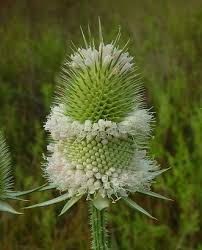
(B/P) to 7′. Cut-Leaved Teasel. Europe and Asia. Large, spear-shaped leaves with distinctive pinnately lobed edges, prominent white midribs and prickly stems. Pale green, oval porcupine-esque heads with intermittent rings of pale pink, individual florets. Invaluable in dried arrangements. Loves to self-sow and is perfect for the wild garden. Sun. 3 & T1
Category: Rarium | Sub-Category: Woodland
Scientific Name (Genus/Species): Aralia continentalis
Family: (Araliaceae)
(P) to 4′. Manchurian Spikenard. Clump-forming, architectural perennial with arching stems of alternate, bipinnate leaves. In midsummer, many terminal racemes of green flowers are soon followed by globose, blue-black fruit. Partial shade. Likes moisture. 3 & 7 for 4 months, then T1

Category: Rarium | Sub-Category: Perennials for Sun
Scientific Name (Genus/Species): Angelica polymorpha
Family: (Apiaceae)
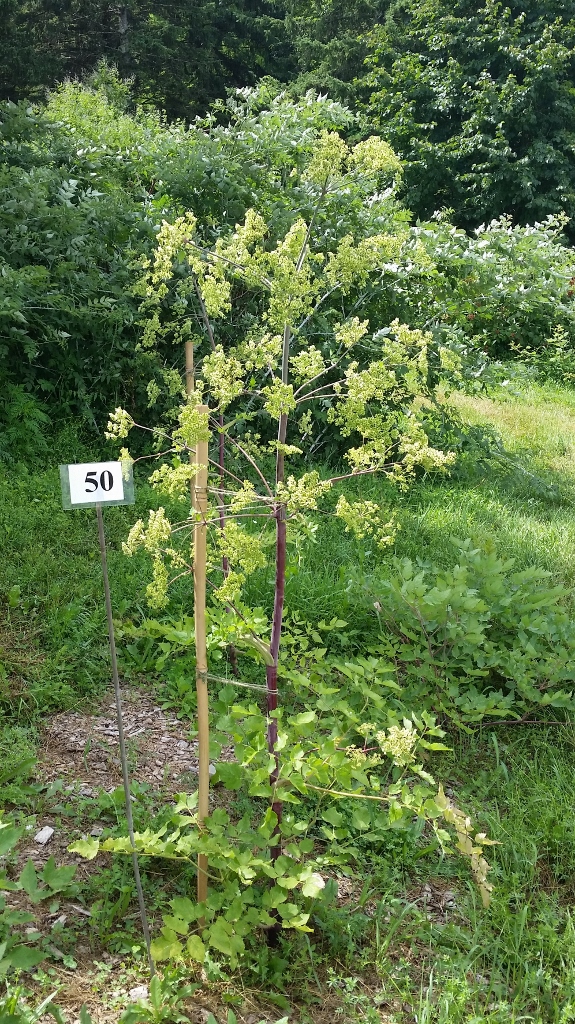
(P) to 6′. China. Exquisite, airy umbels of small, creamy white flowers and attractive lobed leaves. The flowering umbels look like a perfect firework display. A choice plant. Sun. 3 & 6
Category: Rarium | Sub-Category: Perennials for Sun
Scientific Name (Genus/Species): Amsonia rigida
Family: (Apocynaceae)
(P) to 2′. Stiff Bluestar. Southern Georgia and Northern Florida. A smaller Amsonia with a distinctive, dark reddish purple colouration to its emerging stems contrasting beautifully with the shiny, leathery, elliptical leaves. Loose cymes of light blue, starry flowers. The outer flower tube is flushed a darker hue giving it more pizzazz. Surprisingly hardy given its southern origin. Moist, well drained sandy soil. Sun/partial shade. 3, 7 for 4 weeks, then T2


Category: Rarium | Sub-Category: Perennials for Sun
Scientific Name (Genus/Species): Amsonia ciliata
Family: (Apocynaceae)
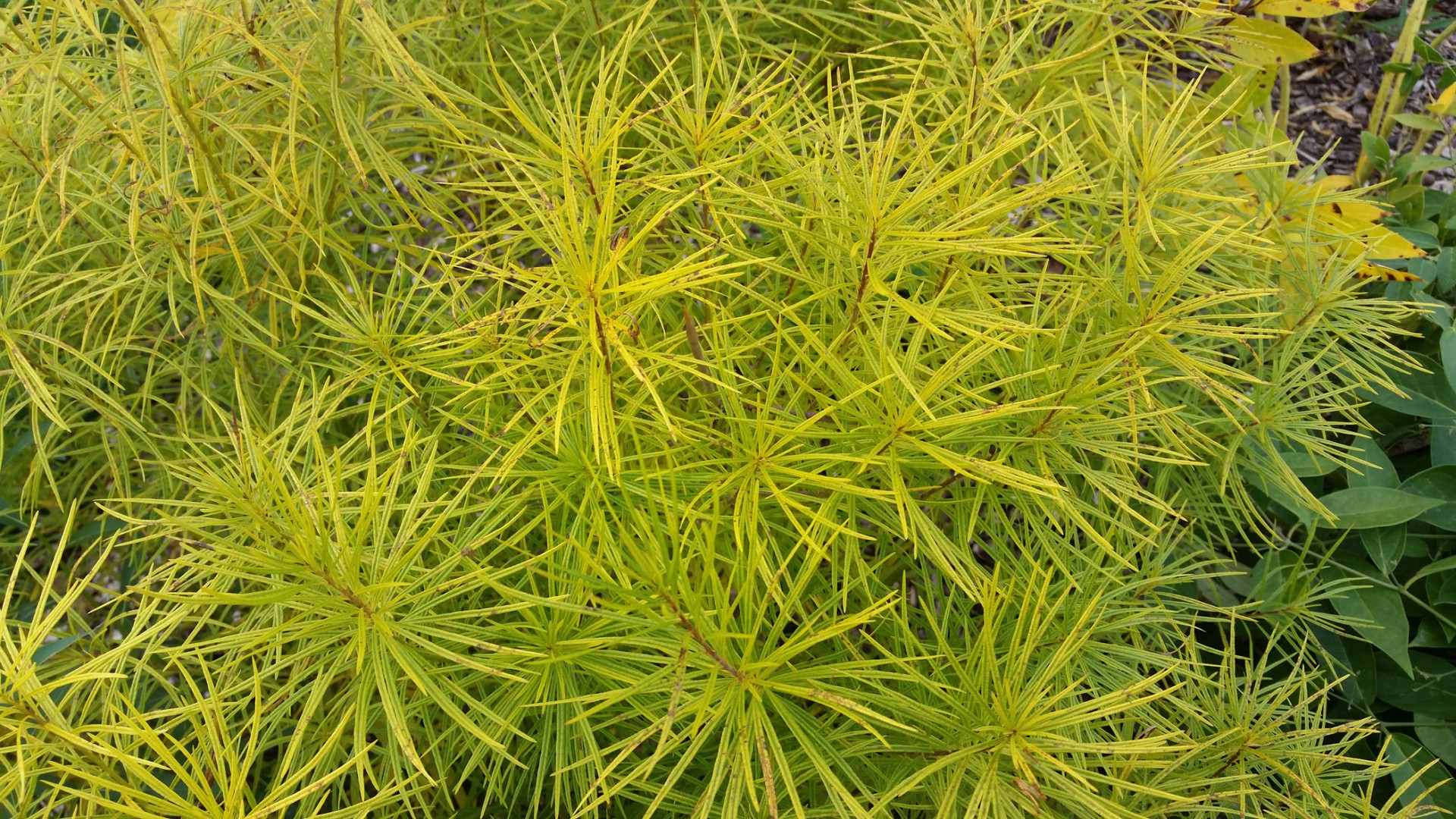
(P) to 20″. Narrow-Leaved Bluestar. This native of open sandy woodland and prairies from North Carolina to Missouri resembles a petite, more refined version of the Arkansas Bluestar (Amsonia hubrichtii) with five-petalled, starry, periwinkle-blue flowers in early summer. The narrow, almost needle-like foliage turns a brilliant golden yellow in the fall. Dry, well-drained soil. Sun. 3 & 7 for 12 weeks, then T2
Category: Seminum | Sub-Category: Annuals for Sun
Scientific Name (Genus/Species): Coreopsis tinctoria var. atkinsoniana
Family: (Asteraceae)
(A) to 3′. Atkinson’s Tickseed. North America. Masses of bright yellow, daisy-like flowers. The individual ray florets contrast nicely with the purplish brown central disc florets. Feathery, elegantly curving, branched stems of finely-cut, bipinnate foliage gently weave through its neighbours. A long, long bloomer. Well-drained soil. Sun. 3 & T3

Category: Seminum | Sub-Category: Wildflowers
Scientific Name (Genus/Species): Vernonia noveboracensis
Family: (Asteraceae)
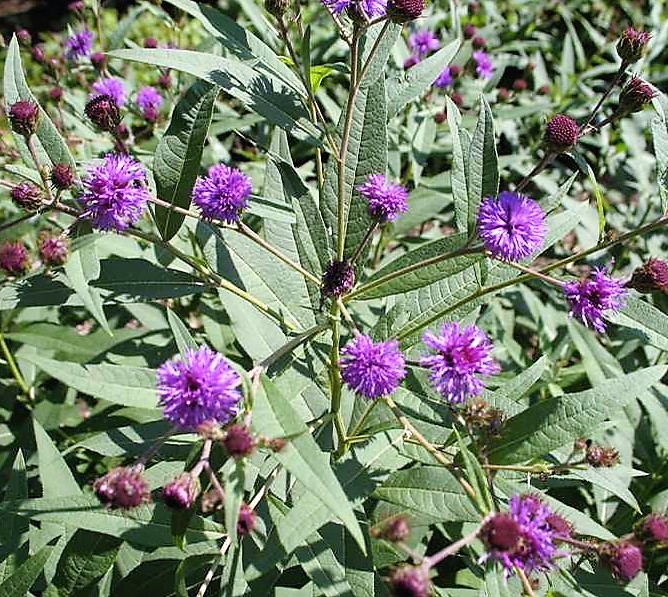
(P) to 6′. New York Ironweed. Terminal clusters of fuzzy, thistle-like deep purple florets bloom in late summer. Strong stems have whorls of alternate, lanceolate, pointed leaves. Earns its name because of its “iron-like” qualities – tough stems, the rusty-tinged colour of fading flowers and the rusty colour of the persistent, ripe seed heads. Moist soil. Sun/partial shade. 3 & T1 for 3 months, then T2

Category: Seminum | Sub-Category: Wildflowers
Scientific Name (Genus/Species): Vernonia arkansana (syn. V. crinata)
Family: (Asteraceae)
P) to 5′. A statuesque Ironweed from the Ozark region of Missouri, producing tufts of fuzzy, deep purple, rayless flowers in late summer on tall, strong stems covered in minute fine white hairs with long, lance-like leaves in large whorls. Moist soil. Sun/partial shade. 3 & T1 for 3 months, then T2
Category: Seminum | Sub-Category: Wildflowers
Scientific Name (Genus/Species): Verbesina virginica
Family: (Asteraceae)
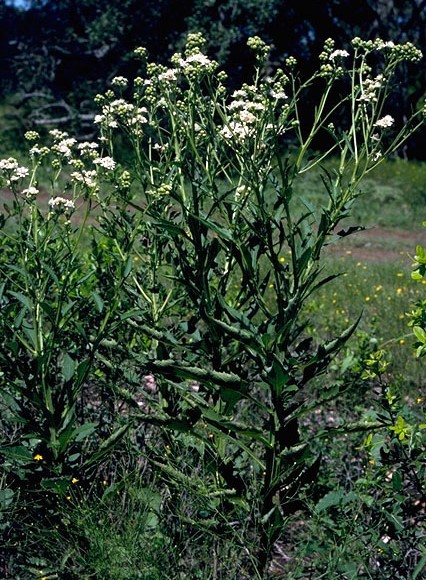
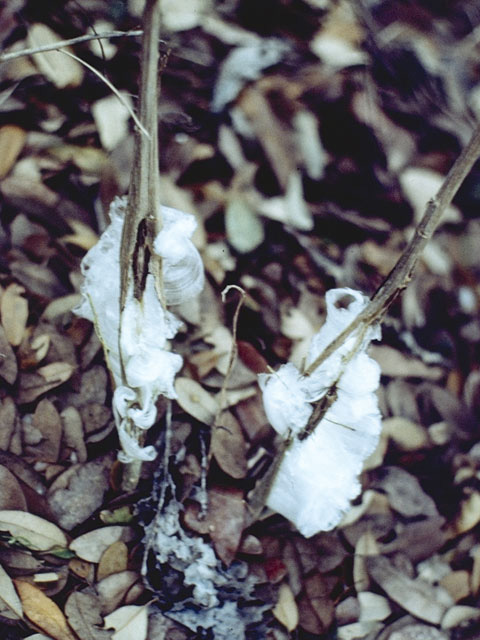
(P) to 6′. Frostweed, Virginia Crownbeard. Southeastern US. From a distance, the many loose, open corymbs of small flowers look like white “daisies.” On closer inspection the flowers are comprised of up to five oblong and notched, pistillate ray florets and many white central disc florets with five prominent, exserted, purple anthers. The pubescent, winged stems are interesting with their up to six-inch long, downy, alternate, oblong-lanceolate leaves with serrated margins. Each stem has soft, fleshy green flanges running longitudinally down its length. When winter weather brings ice, the stems exude water that freezes into fascinating shapes, hence its common name. Blooms late summer. Often seen along roadsides and open places. An important late season nectar plant for pollinators. Well-drained soil. Sun/partial shade. 4 & T1
Category: Seminum | Sub-Category: Wildflowers
Scientific Name (Genus/Species): Tradescantia subaspera
Family: (Commelinaceae)
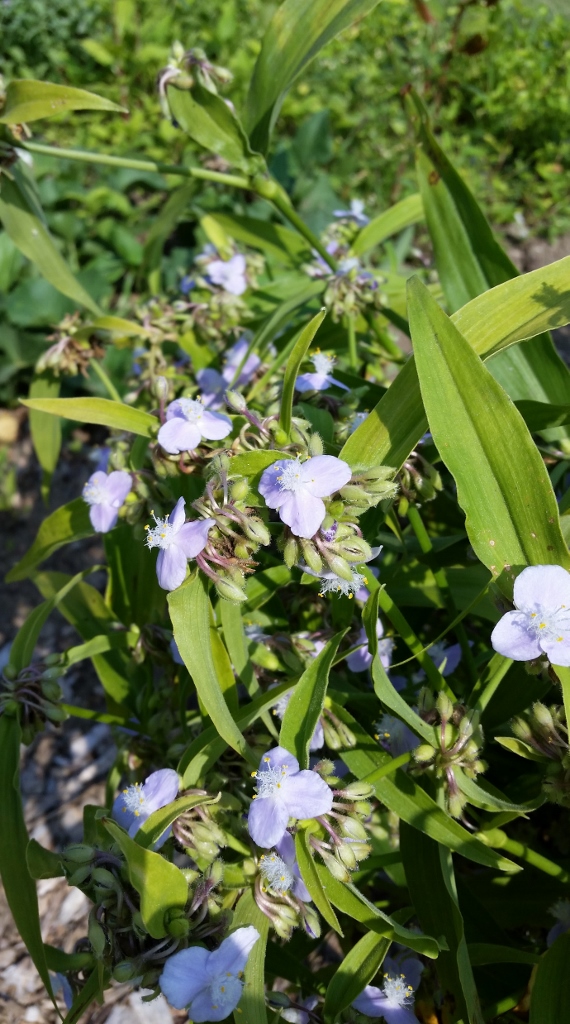
(P) to 3′. Zigzag Spiderwort. Missouri. Broader leaves and the distinctive zigzag stem set it apart from the old faithful T. virginiana. Terminal clusters of numerous flower buds open daily to large, violet blue, three-petalled flowers that are highlighted by the yellow anthers atop long, hairy, blue filaments. We cut the foliage in half after flowering to prevent flopping and encourage new growth and possible repeat blooms. After cutting back a viscous secretion is released from the stem, which hardens to become thread-like and silky-like the web of a spider. Ours is growing on the Order Beds in full sun and good soil. A long bloom time from May to August. 3 & T1
 Browse the index >>