Category: Rarium | Sub-Category: Alpine and Rock Garden
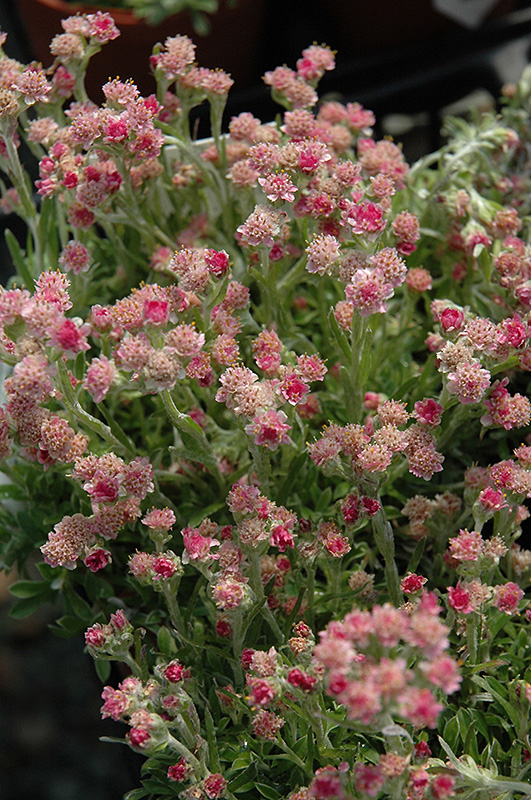
Scientific Name (Genus/Species): Antennaria dioica 'Minima'
Family: (Asteraceae)
(P) to 2″. Half the size of regular Pussy-toes, this adorable little carpeting perennial is at home in the sunny rock garden, alpine trough or growing between stepping stones. It forms a flat mat of tiny silver edged, grey-green leaves. Short stems with tight terminal clusters of buds that resemble the toes of a cat, open to papery white flowers with a pinkish tinge. A billowing cloud of fluffy seedheads follows. Blooms in late spring. A tough and useful plant. Well-drained soil and sun. 3 & T2
Category: Seminum | Sub-Category: Alpine and Rock Garden
Scientific Name (Genus/Species): Alyssoides utriculata
Family: (Brassicaceae)
Subshrub to 14″. Bladder Pod. Mountains of Europe. Alpine with succulent, matte green leaves and panicles of fragrant, bright yellow, mustard-like flowers, which bloom with Phlox, Alyssum and Saxifraga moschata. Later on, interesting ovoid, inflated seedpods emerge and eventually fall apart to reveal their inner, translucent septum with seeds attached resembling a miniature Honesty plant. Sun. 4 & T2

Category: Seminum | Sub-Category: Woodland
Scientific Name (Genus/Species): Zizia aurea
Family: (Apiaceae)
(P) to 3′. Golden Alexanders. Eastern Canada to southern United States. Divided green foliage, with compound umbels of many tiny, yellow flowers. Blooming May through June in our Woodland. The evening sun shining through the bronze seedheads is heavenly. Self-sows freely. Moisture and partial shade. Best sown in situ or 3 & T2

Category: Seminum | Sub-Category: Woodland
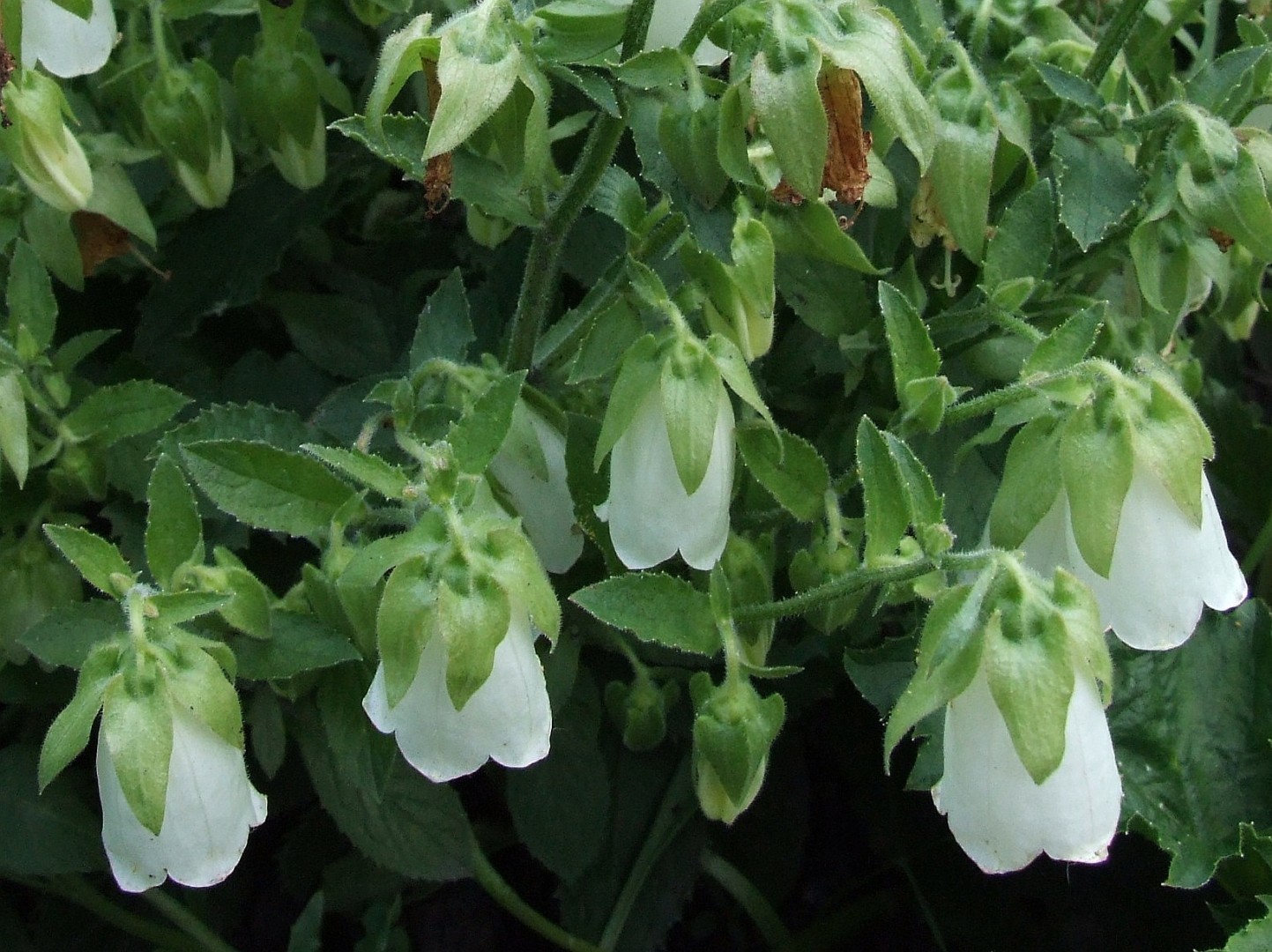
Scientific Name (Genus/Species): Campanula hofmannii (syn. Symphyandra hofmannii)
Family: (Campanulaceae)
(P) to 2′. A Bosnian native. Marvelous, creamy white, pendulous bells in terminal racemes contrast with the serrated basal leaves. Showy seedpods, too. Self-sows gently. Sun/partial shade. 4 & T2
Category: Seminum | Sub-Category: Woodland
Scientific Name (Genus/Species): Stylophorum diphyllum
Family: (Papaveraceae)
(P) to 18″. Celandine Poppy. Eastern North America. Terminal clusters of large, lemon-yellow, saucer-shaped blooms light up the woodland garden in May and June. The irregularly lobed, blue-green foliage with a soft, silvery underside is very handsome. Seed is held for months in pendulous, oblong, white to yellow pods covered in fine hairs. Self-sows. Moist, humus-rich soil. Shade/partial shade. 4 & T1

Category: Seminum | Sub-Category: Woodland
Scientific Name (Genus/Species): Salvia koyamae
Family: (Lamiaceae)
(P) to 2.5′. Japanese Yellow Sage. Most Salvias prefer sun, but this unique Salvia, prefers partial shade. Spikes of whorled, large, clear yellow, hooded and lipped flowers bloom nonstop from August until hit by a hard frost. The bold, arrow-shaped foliage makes a handsome groundcover. 4 & T2

This seed is either sold out or unavailable
Category: Seminum | Sub-Category: Woodland
Scientific Name (Genus/Species): Rodgersia podophylla
Family: (Saxifragaceae)
(P) to 4.5′. Rodger’s Flower. This woodland wonder is named in honour of Admiral John Rodgers of the US Navy (1812-1882), distinguished naval officer who commanded in 1852-1856 a Pacific expedition during which the first species of this genus was discovered. This Japanese native has elegant, palmate leaves that emerge bronze when young, turn to green, and take on coppery tones at they mature. Small, white to greenish-white funnel-shaped, apetalous flowers bloom in dense, branched clusters (to 12 inches long) from June to August on upright stems rising 1 to 2 feet above the foliage. Great in shade or try in a cool, sunny place by the water’s edge. A mainstay in our Woodland Garden. 5 & T2

Category: Seminum | Sub-Category: Woodland
Scientific Name (Genus/Species): Maianthemum racemosum (syn. Smilacina racemosa)
Family: (Asparagaceae)
(P) to 3′. Solomon’s Zigzag, False Spikenard, Treacleberry. A North American native that is most welcomed in the woodland. Arching, bright green stems and six-inch long, elliptic to lanceolate leaves with prominent, parallel veining. Fluffy, linen-white flowers bloom on panicles in late spring. Red to purple berries follow. Moist soil. Partial shade to shade. 3 & T2

Category: Seminum | Sub-Category: Woodland
Scientific Name (Genus/Species): Kirengeshoma palmata
Family: (Hydrangeaceae)
(P) to 6′. A Japanese dignitary. Waxy, soft yellow flowers in late summer, leaves of clear green “…placed oppositely up the arching ebony stem.” (GST**). Kirengeshoma is a star performer for us in the Woodland, Flower Garden and Himalayan Slope. We love this plant. Partial shade and good soil. 5 & T2

Category: Seminum | Sub-Category: Woodland
Scientific Name (Genus/Species): Jeffersonia diphylla
Family: (Berberidaceae)
(P) to 18″ in flower. Jefferson’s Twinleaf. A native New Yorker. In early spring the emerging foliage is striking in shades of pinkish purple. The stems stay dark and the foliage unfurls into two, blue-green, kidney-shaped, lobed divisions. The eight-petalled, white, cup-shaped flowers face upwards and display a cooling light green centre and creamy yellow coloured stamens. Interesting pear-shaped seed pods with pointed hinged lids hold the shiny brown seeds. Moist woods. Partial shade/shade. 3 & T2 & Δ

 Browse the index >>