Category: Seminum | Sub-Category: Wildflowers
Scientific Name (Genus/Species): Senna marilandica (syn. Cassia marilandica)
Family: (Caesalpiniaceae)
(P) to 6′. Southern Wild Senna. Eastern North America. Very similar to the above, the flowers of Senna marilandica have styles with short appressed hairs, while the flowers of Senna hebecarpa have styles with long spreading hairs. Southern Wild Senna, because its range doesn’t extend as far north as a closely related species, Senna hebecarpa (Wild Senna). Blooms from July to September. Well-drained soil. Sun/partial shade. 1 & 3 & T3

Category: Seminum | Sub-Category: Perennials for Sun
Scientific Name (Genus/Species): Scutellaria altissima
Family: (Lamiaceae)
(P) to 3′. Soaring Skullcap. Southeast Europe, Caucasus. Bushy perennial with light green, serrated, slightly downy, oval leaves. Numerous, one-sided racemes of many, pale blue, tubular, lipped flowers. A welcome presence in our Gravel Garden. Well-drained soil. Sun/partial shade. 3 & T2

Category: Seminum | Sub-Category: Perennials for Sun
Scientific Name (Genus/Species): Scrophularia nodosa
Family: (Scrophulariaceae)
(P) to 3′. Common Figwort. Europe. Dainty brown flowers are surrounded by green sepals on racemes in branched terminal clusters. Leaves are entire, ovate, and acute. A good plant for sun/partial shade. Self-sows. 3 & T1
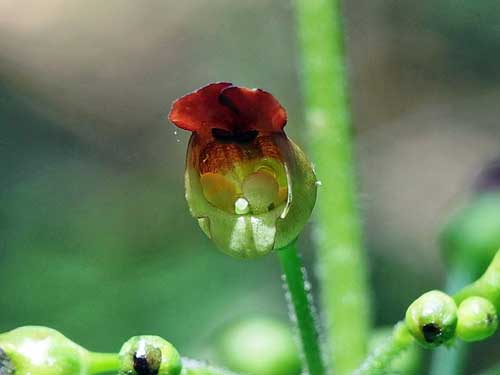
Category: Seminum | Sub-Category: Perennials for Sun
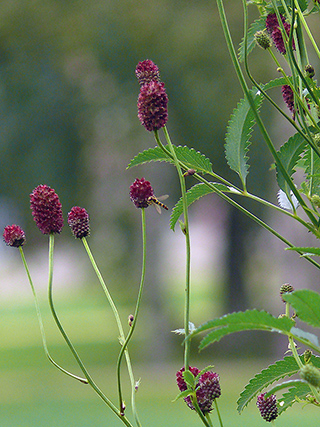
Scientific Name (Genus/Species): Sanguisorba officinalis
Family: (Rosaceae)
(P) to 6′. Great Burnet. A tall, airy herb with a mass of ¾-inch maroon drumsticks. Basal leaves have dark green, glossy leaflets. Quite a sight growing through our purple fennel. We love it in the herb garden and in the flower garden. Easy to grow in moist, rich soil. Blooms June to October. Sun. 3 & T2 & Δ
Category: Rarium | Sub-Category: Perennials for Sun
Scientific Name (Genus/Species): Sanguisorba obtusa 'Chatto'
Family: (Rosaceae)
(P) to 4′. Japanese Burnet. An elegant plant with striking, blue-grey, toothed, pinnate foliage which is sparsely topped with white bottle brush flowers. A reliable and beautiful performer that is admired more for the foliage than flower. Midsummer. Sun. 3 & T2 & Δ

Category: Seminum | Sub-Category: Perennials for Sun
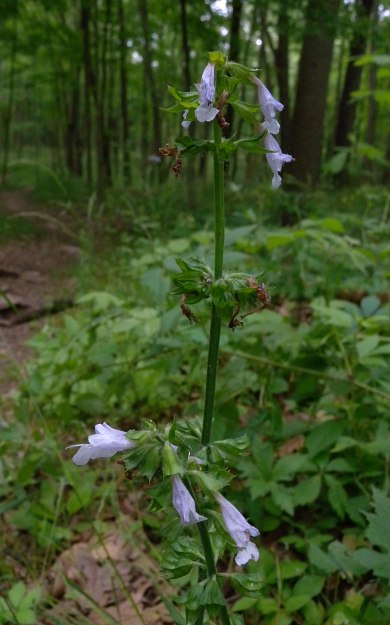
Scientific Name (Genus/Species): Salvia lyrata
Family: (Lamiaceae)
(P) to 20″. Lyre-leaved Sage. A native of eastern North America. Leafless flower stems display hooded, purple flowers in whorls in early summer. The calyces remain ornamental after the flowers fade. An attractive yet tough plant. Sun. 4 & T2
Category: Seminum | Sub-Category: Perennials for Sun
Scientific Name (Genus/Species): Ruta odorata
Family: (Rutaceae)
(P) to 2′. Dwarf Rue. Central Asia. Shrubby, low branching, woody-stemmed mounds of deeply divided, blue-green, aromatic foliage. Showy sprays of small, four-petalled, long-lasting, sulphur yellow blooms in summer. Makes a good edging plant but be careful when handling foliage as oil in leaves can cause a rash. This rare relative of R. graveolens has survived winters on our exposed Order Beds and is a gentle self-sower Well-drained soil. Sun. 3 & T2

Category: Seminum | Sub-Category: Perennials for Sun
Scientific Name (Genus/Species): Rumex sanguineus var. sanguineus
Family: (Polygonaceae)
(P) to 12″. Bloody Dock. Europe. A fantastic foliage plant with pointed, oblong, medium green leaves, veined blood red to maroon. Reddish brown flowers froth in panicles. If you want a striking foliage plant at the front of the border, this is your plant. Sun/partial shade. 4 & T2

Category: Seminum | Sub-Category: Wildflowers
Scientific Name (Genus/Species): Rudbeckia triloba
Family: (Asteraceae)
(B/P) to 4′. Three-lobed Coneflower. This biennial or short-lived perennial is native to Central Eastern US. Densely branched and somewhat hairy with thin, three-lobed, rough-textured leaves. The lower leaves ovate to ovate-cordate with long petioles, and upper leaves are less rounded and stalkless. Yellow-orange ray petals surround and accentuate the black to purple button discs. Good colour for the garden throughout the summer. Makes an excellent cut flower and is a mainstay in our bouquets. Sun. 4 & T2

Category: Seminum | Sub-Category: Perennials for Sun
Scientific Name (Genus/Species): Rubia tinctorum
Family: (Rubiaceae)
(P) to 2′. Dyer’s Madder. East Mediterranean to Central Asia. The roots of this plant have been used since ancient times as a red dye for leather, wool, cotton and silk. Early evidence of dyeing comes from India where a piece of cotton dyed with madder has been recovered from the archaeological site at Mohenjo-daro (3rd millennium BCE). The red coats of the British Redcoats were dyed with madder, after earlier being dyed with cochineal. The foliage resembles sweet woodruff or bedstraw with whorled lanceolate leaves that are leathery, rough and prickly. The mostly five-petalled flowers are tiny in loose, many branched, leafy cymes, yellow-green to honey coloured. Round, shiny black, berry-like fruit follow. Summer flowering. Sun. 3 & T1

 Browse the index >>