Category: Seminum | Sub-Category: Perennials for Sun
Scientific Name (Genus/Species): Acanthus hungaricus
Family: Acanthaceae
(P) to 3′. Bear’s Breeches. Balkans. Free-flowering perennial with tall, upright spikes of smoky lavender-pink lipped flowers emerging from reddish purple, ovate bracts. The flowers appear to have a greenish wash. Forms a large, imposing clump of arching, deeply-lobed, spiny leaves. Flowers late summer with persistent architectural beauty. Well-drained soil. Sun. 3 & T1

This seed is either sold out or unavailable
Category: Seminum | Sub-Category: Bulbs
Scientific Name (Genus/Species): Allium sphaerocephalon
Family: (Alliaceae)
Hardy bulb to 3′. Drumstick Allium. Europe, North Africa, West Asia. Cylindrical, hollow, grey-green leaves to 14 inches long form a grass-like foliage clump in spring. Sturdy, slender stems rise in late spring and are topped with oval, clover-like flowerheads. Each flowerhead is a tight, dense, one-inch umbel of tiny florets that emerge deep green but mature (top to bottom) to rose-purple, displaying an interesting bi-colour effect. Excellent when weaving through their neighbours. Blooms mid-summer. Sun. 3 & 6
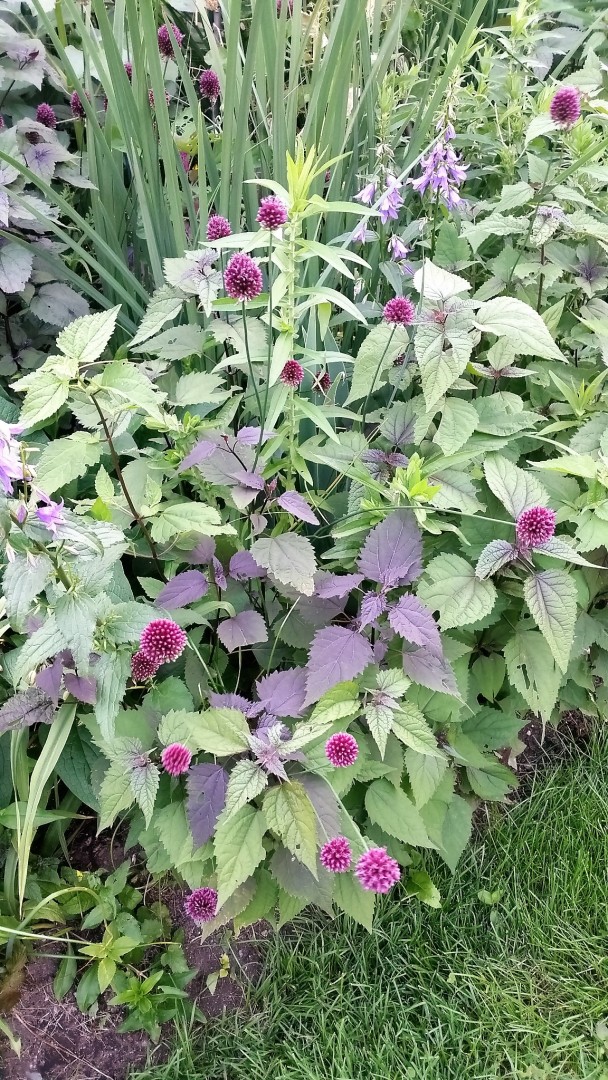
Category: Rarium | Sub-Category: Shrubs and Vines
Scientific Name (Genus/Species): Xanthorhiza simplicissima
Family: (Ranunculaceae)
Hardy shrub to 18″. Yellowroot. Appalachians. A much underused native plant that makes a striking groundcover for the woodland. In early summer, sprays of peculiar, starry, brownish purple flowers emerge atop stems of rich green, irregularly toothed, pinnate leaflets. Over time the plants form dense, lush green colonies with the foliage turning a burnished coppery-gold in the autumn. Partial shade/shade. PC – 4 wks, 3 & T1
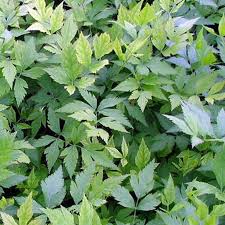
Category: Seminum | Sub-Category: Woodland
Scientific Name (Genus/Species): Syneilesis aconitifolia
Family: (Asteraceae)
(P) to 2′. Shredded Umbrella Plant. Japan. Wonderful foliage plant very reminiscent of Aconitum, with woolly, peltate, deeply divided leaves. Clusters of small, fluffy pink flowerheads atop stiff, dark stems. Intriguing. Partial shade. 4 & T2

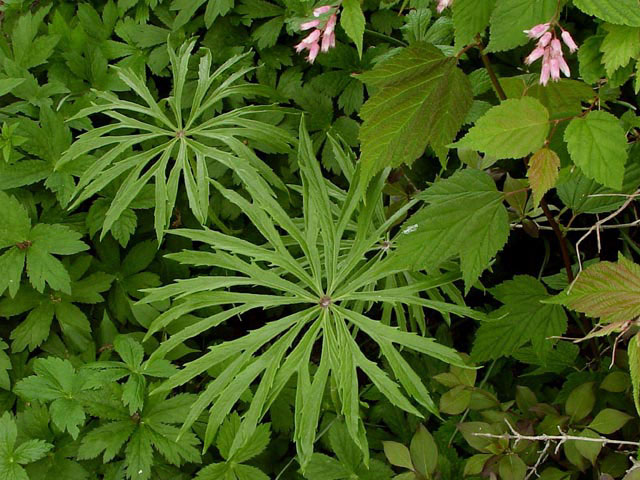
Category: Seminum | Sub-Category: Wildflowers
Scientific Name (Genus/Species): Solidago rugosa
Family: (Asteraceae)
P to 5′. Wrinkleleaf Goldenrod. Central and eastern North America. This clump-forming plant has numerous, narrow, deeply toothed, dark green leaves with a wrinkled appearance to the upper surface. Tall, rough, hairy stems bear arching branches with panicles of small, light yellow flowerheads concentrated on the upper side. Physicians in ancient times believed that goldenrod had healing powers; in recent times these plants have been commonly blamed for causing hay fever, but its irritating symptoms are actually caused by ragweed (Ambrosia species), whose pollen is abundant when goldenrod is in flower. All parts of this plant are useful in the native ecosystem, from the nectar and pollen of the flowers, to the foliage and seeds, even to the roots that act as a soil stabilizer. Blooms July to October. A “must have” for the wildflower garden. Sun. 4 & T2

Category: Rarium | Sub-Category: Woodland
Scientific Name (Genus/Species): Semiaquilegia ecalcarata
Family: (Ranunculaceae)
(P) to 16″. False Columbine. A native of eastern Asia with exquisite mauve-purple, bell-shaped, nodding flowers resembling spurless Columbines. A delicate addition to the woodland. We have ours self-sowing nicely around the troughs near the Gardeners’ Bothy. Blooms in late spring. Sun/partial shade. 4 & T2

Category: Rarium | Sub-Category: Alpine and Rock Garden
Scientific Name (Genus/Species): Pulsatilla patens
Family: (Ranunculaceae)
(P) to 12″. Eastern Pasque Flower. Native to Europe, Russian, China, Canada and US. Blooming in April at 4″ high, before the leaves develop, the ethereal, open, bell-shaped, flowers command attention. The solitary, two-inch flower has six blue-violet, petal-like sepals and a ring of many yellow staminodes that surround a light green central boss of stamens. The sepals are pointed at the tip and lined with many parallel veins. Flowers, stems and foliage are all covered in fine, silky, whitish hairs. The flowers are followed by plume-like seed heads (reminiscent of some Clematis and Geum) that have good ornamental interest. Deeply divided basal foliage grows to 12 inches tall after the flowers have faded. A great rock garden plant and the state flower of South Dakota. Grows best in drier, sandier soil. Sun. 3 & T2 & ∆

Category: Seminum | Sub-Category: Wildflowers
Scientific Name (Genus/Species): Parthenium integrifolium
Family: (Asteraceae)
(P) to 3′. Wild Quinine. Eastern United States. Tiny clustered, almost ball-like, white flowers in broad, branching, flat-topped corymbs. The tapering leaves are coarsely toothed and decrease in size up the stems, with the upper leaves often absent or clasping the stem. Both the leaves and stems are rough and covered in short bristly hairs. Well-drained soil. Sun. 4 & T2

Category: Seminum | Sub-Category: Annuals for Sun
Scientific Name (Genus/Species): Monarda punctata
Family: (Lamiaceae)
(A) to 3′. Horse Mint. Native to the Great Plains of the United States. Dense whorls of pale yellow, hooded flowers spotted with purple-brown. Each whorl is surrounded by large, pink-tipped, green bracts. The narrow, toothed leaves have a grey cast. A very showy plant. Sun. 4 & T1

Category: Seminum | Sub-Category: Perennials for Sun
Scientific Name (Genus/Species): Eryngium giganteum
Family: (Apiaceae)
Short-lived perennial/biennial to 4′. Miss Willmott’s Ghost. Miss Willmott was known to scatter this seed surreptitiously in the gardens she visited, leaving her horticultural calling card! The elongated, dome-shaped, greenish flowerheads are surrounded by spiny tipped, silvery bracts. Attractive, marbled, grey-green, spiny foliage with dark green basal rosettes adds more drama. Excellent dried flower. Self-sows happily. Well-drained soil. Sun. 3 & 6 & Δ

 Browse the index >>