Category: Seminum | Sub-Category: Wildflowers
Scientific Name (Genus/Species): Centaurea phrygia
Family: Asteraceae
(P) to 4′. Wig Knapweed. Europe – meadows, field margins and open woods. A sparsely hairy to roughly textured perennial that combines well with informal plantings of ornamental grasses. The purplish lilac flowers have long, obliquely funnel-shaped, deeply divided, upward sweeping, outer ray florets; the central disc florets are smaller and tubular. Leaves are alternate, short-stalked and broadly lanceolate, with a regularly toothed margin. Sun. 3 & T2

This seed is either sold out or unavailable
Category: Seminum | Sub-Category: Wildflowers
Scientific Name (Genus/Species): Solidago rugosa
Family: (Asteraceae)
P to 5′. Wrinkleleaf Goldenrod. Central and eastern North America. This clump-forming plant has numerous, narrow, deeply toothed, dark green leaves with a wrinkled appearance to the upper surface. Tall, rough, hairy stems bear arching branches with panicles of small, light yellow flowerheads concentrated on the upper side. Physicians in ancient times believed that goldenrod had healing powers; in recent times these plants have been commonly blamed for causing hay fever, but its irritating symptoms are actually caused by ragweed (Ambrosia species), whose pollen is abundant when goldenrod is in flower. All parts of this plant are useful in the native ecosystem, from the nectar and pollen of the flowers, to the foliage and seeds, even to the roots that act as a soil stabilizer. Blooms July to October. A “must have” for the wildflower garden. Sun. 4 & T2

Category: Seminum | Sub-Category: Wildflowers
Scientific Name (Genus/Species): Parthenium integrifolium
Family: (Asteraceae)
(P) to 3′. Wild Quinine. Eastern United States. Tiny clustered, almost ball-like, white flowers in broad, branching, flat-topped corymbs. The tapering leaves are coarsely toothed and decrease in size up the stems, with the upper leaves often absent or clasping the stem. Both the leaves and stems are rough and covered in short bristly hairs. Well-drained soil. Sun. 4 & T2

Category: Seminum | Sub-Category: Wildflowers
Scientific Name (Genus/Species): Abutilon theophrasti
Family: (Malvaceae)
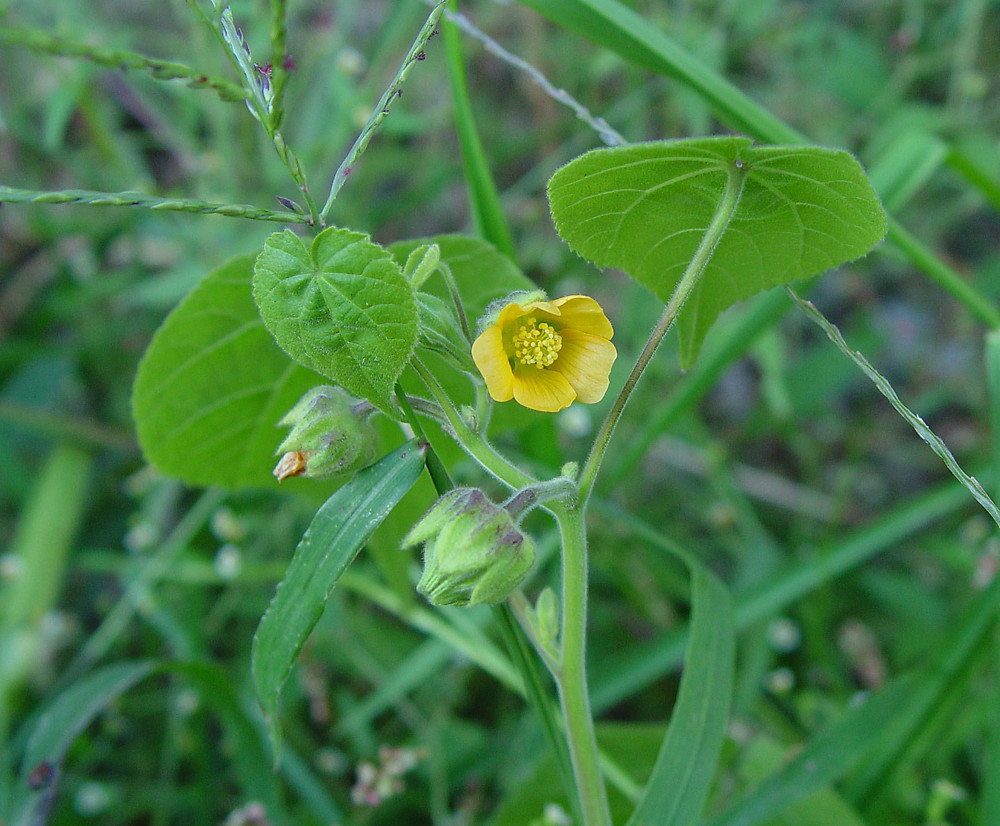
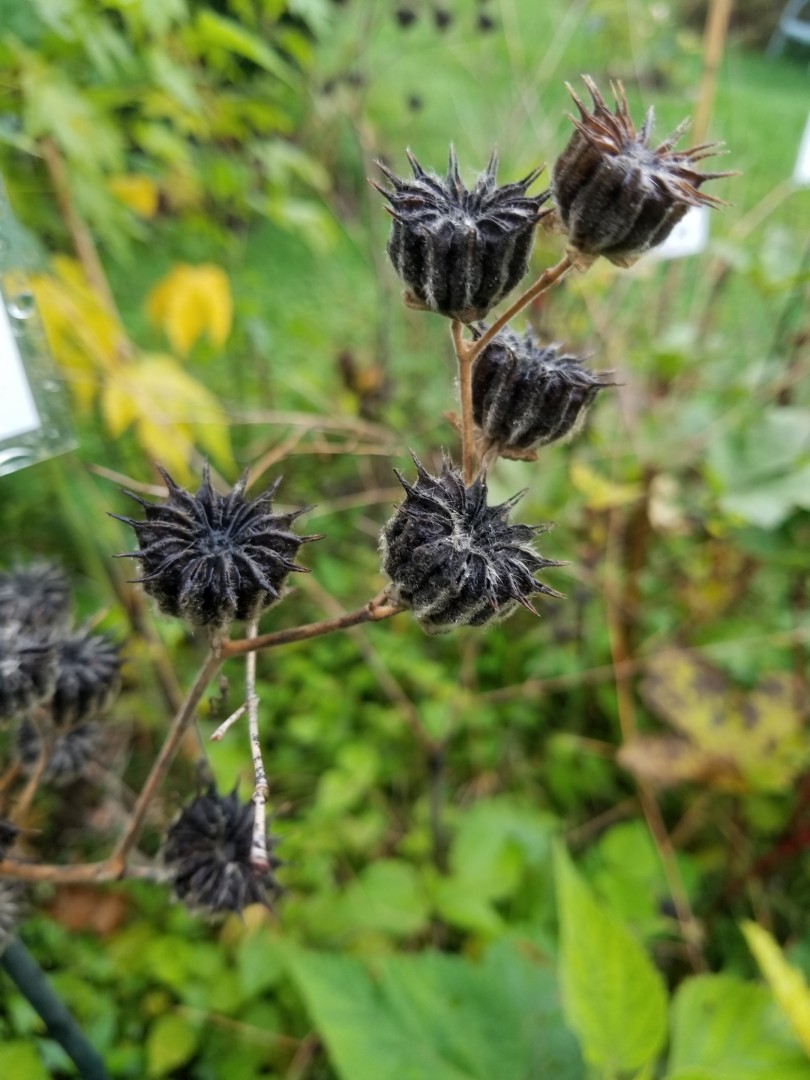
(A) to 3′. Velvet Leaf, China Jute. A Native of southern Asia whose specific epithet commemorates the ancient Greek botanist-philosopher, Theophrastus. Velvet Leaf has been grown in China since around 2000 BCE for its strong, jute-like fibre. The alternately arranged leaves are light green, cordate, pubescent and up to eight inches long and wide. A solitary flower about ¾-inch across emerges from the axils of the upper leaves. Each flower consists of five petals that are yellow to orange-yellow, five light green, pubescent sepals, and numerous stamens with golden yellow anthers that surround the pistil in a loose cluster. The flowers are followed by interesting fruit that is initially light green, but quickly turns brown or black with maturity. This fruit (schizocarp) is a circular cup-shaped disc of 9 to 15 carpels, each with a beak on the margin of the disc. Blooms July to August. Well-drained soil. Sun/partial shade. 3 & T3
Category: Seminum | Sub-Category: Wildflowers
Scientific Name (Genus/Species): Lobelia inflata
Family: (Campanulaceae)
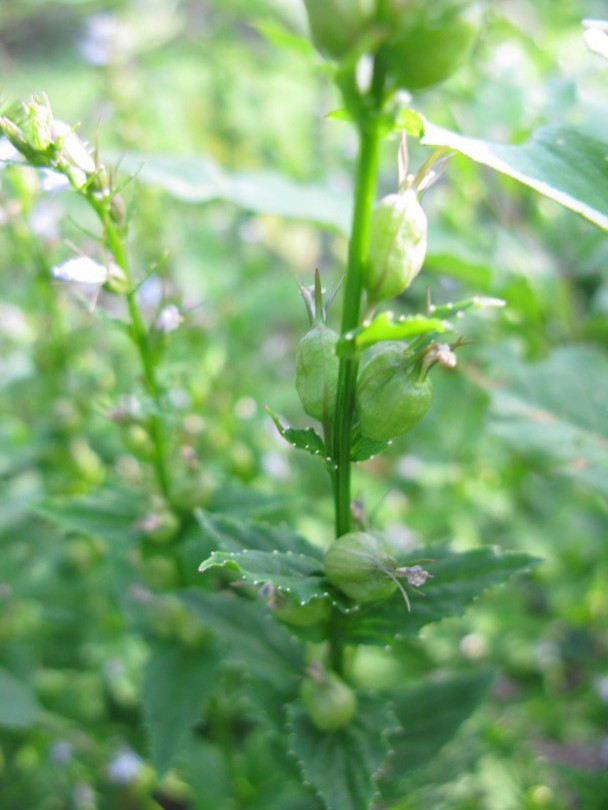
(A) to 3′. Indian Tobacco. Another great native North American plant for the flower border! Spikes of small fan-shaped light blue flowers with a bearded lower lip are followed by fat balloons filled with seeds. Long blooming from summer to frost. The alkaloid Lobeline, was used until recently to appease nicotine cravings. Sun. 3 & 6A

Category: Seminum | Sub-Category: Wildflowers
Scientific Name (Genus/Species): Echinacea purpurea
Family: (Asteraceae)
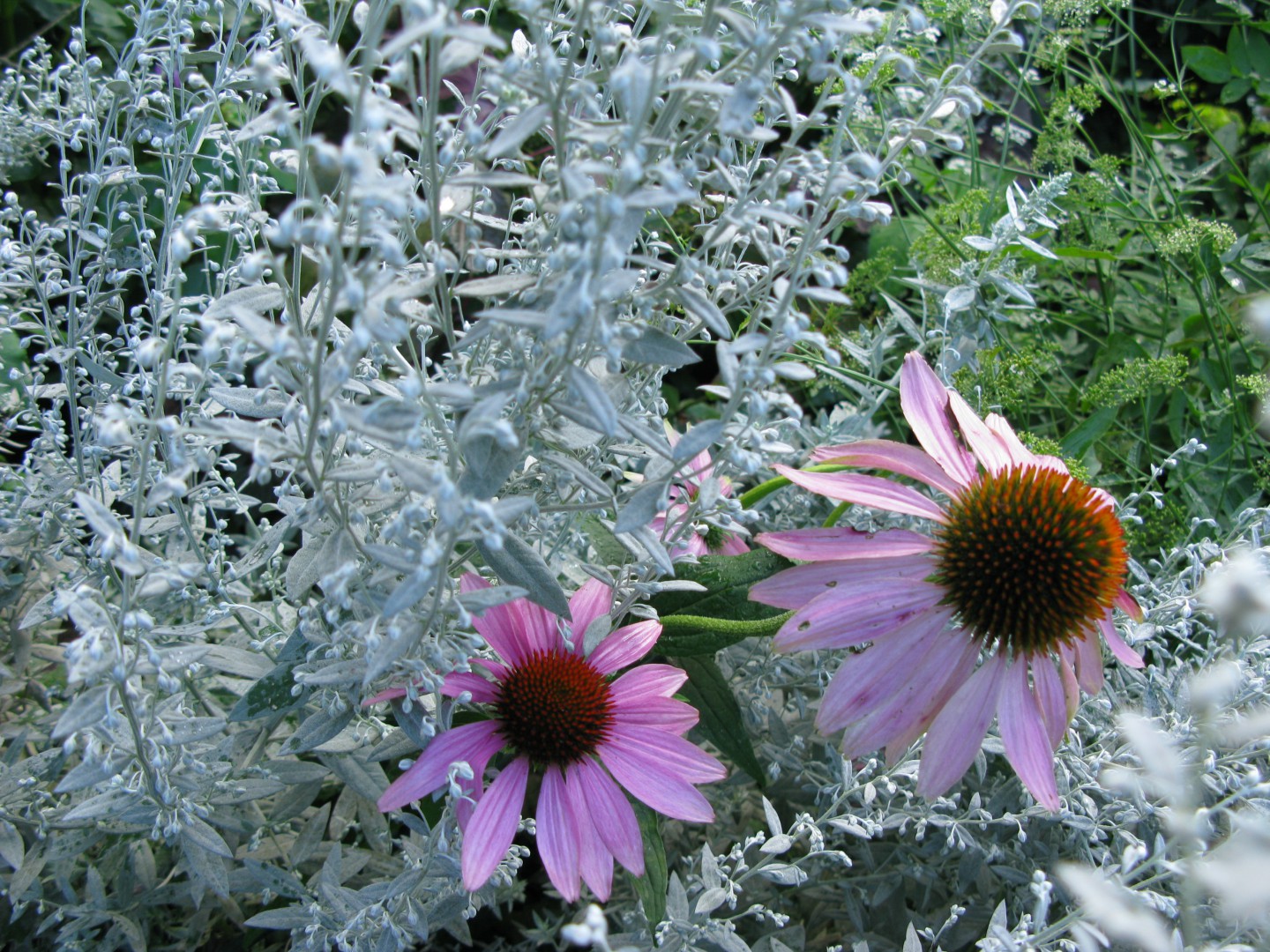
(P) to 3.5′. Purple Coneflower. North America. Large, warm rose-purple daisies with slightly reflexed petals blooming from July into September. A beautiful native wildflower that is at home in the garden. Well-drained soil. Sun. 4 & T2
Category: Seminum | Sub-Category: Wildflowers
Scientific Name (Genus/Species): Oclemena acuminata (syn. Aster acuminatus)
Family: (Asteraceae)
Native perennial to 2′. Whorled Wood Aster. The sharply toothed leaves of this pretty woodland native alternate in a tight spiral on hairy stems, giving a whorled appearance, hence the common name. Terminal clusters of one inch, daisy-like flowers comprised of white-tinted-purple ray florets that surround a central mass of yellow disc florets that turn reddish with age. The ray florets are not straight like other asters, but rather twisty and free-form. Seedheads are clusters of tan cypselae, each cypsela has a pappus of white, silken bristles, aiding its dispersal. Colonizes beautifully in a woodland setting. Blooms June to October. Shade to part shade and humus-rich, woodland soil. 3 & 6 & ∆


Category: Seminum | Sub-Category: Wildflowers
Scientific Name (Genus/Species): Apocynum cannabinum
Family: (Apocynaceae)
Native perennial to 4′. Dogbane, Indian Hemp. This sturdy grower features strong, reddish stems that branch towards the top and support cymes of small, five-petalled, scented, cream-coloured flowers at branch ends or on stalks from leaf axils. Silk, tufted seeds form in long, slender, string bean-shaped pods. Soft green, oval leaves have a distinct silvery midrib and are touched with a light, waxy bloom. Stem are fibrous, very strong, and were once used for sewing and to make rope. The plant is also used in phytoremediation as it is effective in sequestering lead from contaminated soils in its biomass. A good plant for meadows and wild places where it can colonize in accordance with its natural tendencies. Great golden autumn colour too. We grow ours at the Systematic Order Beds in a pot, to keep it in bounds. Sun and average soil. 3, 7 for 4 weeks, then T2

Category: Seminum | Sub-Category: Wildflowers
Scientific Name (Genus/Species): Rudbeckia subtomentosa
Family: (Asteraceae)
(P) to 6′. Sweet Black-eyed Susan. Tallgrass Prairie. A host of two-inch, bright yellow-petalled, dark-eyed daisies. Bushy clumps of downy, sweet scented, grey-green leaves; the lower leaves being three cleft. Blooms in late summer. Moist to well-drained soil. Sun. 3 & T2

Category: Seminum | Sub-Category: Wildflowers
Scientific Name (Genus/Species): Sisyrinchium angustifolium
Family: (Iridaceae)
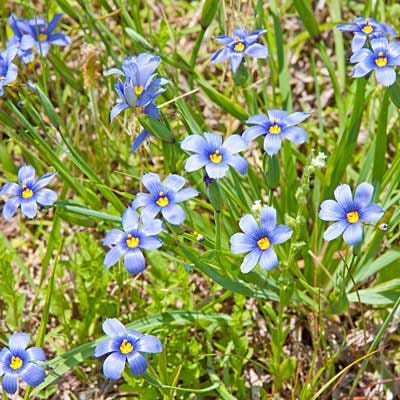
(P) to 12″. Narrow-leaved Blue-eyed Grass. Eastern North America. Delicate fans of narrow, grass-like foliage produce an always welcome display. The star-shaped blooms of six pale violet-blue tepals each tipped with a small point and sporting a yellow central eye accentuated by the yellow stamens and stigma. Blooms late spring and early summer. A cheery, easy going and charming native for the rock garden, woodland edge or the meadow. Sun. 3 & 7 for 90 days then T2

 Browse the index >>